Top Glass Architecture in America: Engineering & Performance Guide
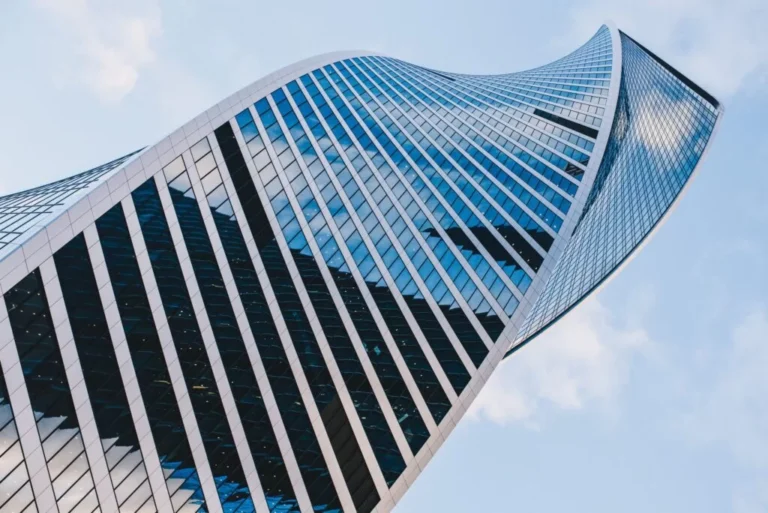
The architectural identity of the United States has long been a dialogue between mass and transparency. While the early twentieth century was defined by the industrial weight of stone and steel, the contemporary era belongs to the glass envelope. This shift represents more than a stylistic preference for the “International Style” or its deconstructivist successors; it is a profound technical negotiation with the physics of light, the regulation of internal climates, and the structural possibilities of a material that is simultaneously a solid and a supercooled liquid. Top Glass Architecture in America. To study the most significant glass structures is to witness the evolution of the building as a living, breathing metabolic system.
Modern glass architecture in America operates at the intersection of extreme transparency and extreme resilience. Whether it is a super-tall skyscraper in a high-velocity hurricane zone or a delicate pavilion in a seismic corridor, the glass is rarely a passive observer of its environment. It is tasked with being the primary insulator, the acoustic barrier, and increasingly, the structural support. As we move toward more ambitious spans and thinner profiles, the engineering depth required to sustain these visions has expanded, moving from standard glazing into the territory of aerospace-grade material science and complex rheology.
Evaluating these structures requires looking beyond the superficial “shimmer” of a facade. One must analyze how the glass interacts with the urban microclimate, how it mitigates the “death ray” effects of concentrated solar reflection, and how it addresses the growing necessity for bird-safe visibility. The following analysis dissects the landscape of high-performance glass, moving from historical precursors to the advanced unitized systems that define the current American skyline. This is not merely an inventory of beautiful buildings; it is a study of how the American built environment has mastered the most difficult material in the architectural toolkit.
Understanding “top glass architecture in america”
To define top glass architecture in america, one must reconcile the competing interests of aesthetic purity and building science. A common misunderstanding among observers is that a glass building is a “monolith.” In reality, the most successful examples are highly articulated assemblies. The excellence of a glass structure is measured by its “U-value” (insulation performance) and its “Visible Light Transmittance” (VLT). A building that appears clear but bakes its occupants in solar heat is a failure of architecture, regardless of its visual acclaim.
Multi-perspective analysis suggests that “top” status is also a function of structural daring. In the US, this often manifests as the use of glass in tension or as a load-bearing element. In lobby podiums and cultural centers, we see glass “fins” that provide lateral stability against wind without the use of steel mullions. This creates a “gravity-defying” appearance that requires immense precision in the manufacturing of laminated ionoplast interlayers. However, the risk of oversimplification lies in focusing only on the “clear” glass; some of the most innovative American glass architecture uses frits, coatings, and dichroic films to manage light as a material in its own right.
Finally, the geographic diversity of the United States forces a variety of technical solutions that prevent a single “best” style from emerging. The requirements for glass in the desert heat of Phoenix—where shading and low-e coatings are paramount—differ fundamentally from the glass needs in Boston, where thermal retention and snow-load resistance on skylights dominate the engineering conversation. Thus, top architecture in this category is always a site-specific response to local physics.
The Contextual Evolution: From Sashes to Skins
The historical trajectory of glass in America began with the “Chicago Window”—a central fixed pane flanked by two operable sashes. This was the first step toward the total transparency we see today. The mid-century modern movement, led by architects like Mies van der Rohe and Philip Johnson, pushed the limits of the material with projects like the Seagram Building and the Glass House. These projects established the “curtain wall” as the standard for American corporate identity.
However, these early icons were energy-inefficient. The glass was often single-pane, leading to massive heat loss. The 1970s energy crisis served as a systemic “shock” that forced the industry to innovate. This led to the development of the Insulated Glass Unit (IGU) and the invention of vacuum-sputtered low-emissivity (low-e) coatings. Today’s top structures are the result of this evolution: they are triple-pane, argon-filled, and coated with microscopic layers of silver that block heat while remaining invisible to the eye.
Conceptual Frameworks and Mental Models
1. The Metabolic Skin Framework
This model treats the glass facade as an organ that regulates the building’s internal temperature.
-
Application: Towers with double-skin facades that create a “thermal chimney” to naturally ventilate the structure.
-
Limit: The increased depth of the facade reduces the sellable floor area, a major constraint in high-density cities.
2. The Fail-Safe Redundancy Model
In structural glass, failure must be “graceful” rather than catastrophic.
-
Application: Laminated glass floors and fins where, if one layer breaks, the remaining layers can hold the load until replacement.
-
Limit: Adds significant weight and cost to the building’s foundation requirements.
3. The Biophilic Connectivity Model
This evaluates how glass serves as a psychological bridge between the urban dweller and the natural light cycle.
-
Application: Using ultra-clear, low-iron glass to maximize color rendering and circadian rhythm health.
Core Categories of Glazing Systems
| System Type | Primary Mechanical Strategy | Key Trade-off | Typical American Use |
| Unitized Curtain Wall | Factory-built panels | High cost; fast install | Commercial Super-talls |
| Structural Fin System | Glass-on-glass support | Extreme fragility during build | Museum Podiums |
| Point-Supported (Spider) | Bolted connections | High stress at holes | Airport Terminals |
| Double-Skin Facade | Air-gap insulation | High maintenance complexity | Institutional Research Hubs |
| Electrochromic (Smart) | Active tinting | Electronic longevity risks | Modern Tech Campuses |
Analytical Real-World Scenarios Top Glass Architecture in America
Scenario A: The High-Velocity Hurricane Zone (Miami)
A new glass tower in Florida must resist wind-borne debris.
-
The Conflict: Large panes are desired for views, but thickness increases weight and cost.
-
The Solution: Use of “stiff” interlayers like SentryGlas, which keep the glass in the frame even after multiple impacts.
-
Second-Order Effect: Increased structural load on the concrete frame due to the weight of the heavy laminate.
Scenario B: The Seismic High-Rise (San Francisco)
A glass skyscraper in a seismic zone.
-
The Conflict: Rigid glass does not like the “drift” (sway) of a building during an earthquake.
-
The Solution: Unitized systems with “expansion joints” that allow panels to slide and pivot without contacting each other.
-
Failure Mode: If the gaps are too small, the panes “clash” and explode during a minor tremor.
Planning, Cost, and Resource Dynamics
The economics of high-performance glass are heavily front-loaded in the engineering and logistics phase.
| Item | Budget Allocation | Risk Factor |
| Material (Glass/Coating) | 30% | Supply chain volatility |
| Structural Engineering | 15% | High liability professional fees |
| Custom Extrusions (Frames) | 25% | Tooling lead times |
| Site Logistics (Cranes/BMUs) | 20% | Weather-dependent installation |
| Testing (Mockups) | 10% | Failure in lab stops the project |
Advanced Tools and Support Systems
-
Building Maintenance Units (BMUs): Specialized rooftop cranes required for cleaning and replacing panes on complex geometries.
-
Heat Soak Testing: A destructive test used to eliminate panes with Nickel Sulfide inclusions that cause spontaneous breakage.
-
Vacuum Lifting Rigs: Essential for handling 2,000-lb panes without chipping the vulnerable edges.
-
Thermal Imaging Cameras: Used during commissioning to verify that the air-seals at the perimeter of the glass are intact.
The Risk Landscape and Failure Modes
-
Thermal Stress Fractures: Occur when one part of a glass pane is shaded and the other is in direct sun, creating a temperature differential that “tears” the glass.
-
Delamination: The peeling of the plastic interlayer at the edges of a laminated pane, often caused by exposure to moisture or incompatible sealants.
-
Seal Failure in IGUs: The “fogging” of double-pane windows when the primary seal breaks, allowing humidity into the cavity.
-
Nickel Sulfide (NiS) Explosion: A latent defect in tempered glass where an impurity expands over time, causing the pane to explode without warning.
Governance, Maintenance, and Long-Term Adaptation
A glass building requires a “governance” structure to survive its intended 50-to-100-year lifespan.
-
Sealant Review Cycles: Every 10 years, the silicone joints between panes should be inspected for “chalking” or loss of elasticity.
-
Gasket Replacement: Modern EPDM gaskets have a finite lifespan and must be replaced to prevent air leaks that compromise the building’s energy rating.
-
Post-Occupancy Evaluation: Monitoring the energy bills to see if the “smart glass” or coatings are performing as modeled in the design phase.
Measurement, Tracking, and Evaluation
-
Visual Light Transmittance (VLT) Logs: Measuring how much natural light is actually reaching the interior desks over a 12-month cycle.
-
U-Value Verification: Using sensors on the glass surface to track heat transfer during extreme winter nights.
-
Bird-Collision Monitoring: Tracking incidents to determine if a retrofit of bird-safe film is required on specific elevations.
Common Misconceptions
-
Myth: “Glass buildings are bird-killers by default.”
-
Correction: Modern frit patterns and UV-coatings allow birds to see the glass while remaining nearly invisible to humans.
-
-
Myth: “All glass is the same color.”
-
Correction: Standard glass is green due to iron content. “Low-iron” glass is perfectly clear but significantly more expensive.
-
-
Myth: “Tempered glass is unbreakable.”
-
Correction: It is strong on the surface but can be shattered by a tiny tap on its vulnerable edge.
-
Conclusion
The top glass architecture in america represents a triumph of engineering over the inherent fragility of the material. As we look toward the future, the focus is shifting from “visual transparency” to “performance transparency.” The next generation of structures will integrate transparent photovoltaics, turning the facade into a power plant. Resilience in glass architecture is no longer about preventing a crack; it is about designing a system that can fail safely, adapt to a changing climate, and provide a healthy, light-filled environment for the people within. The American glass tower is not a static monument; it is a high-technology filter between the human and the atmospheric.