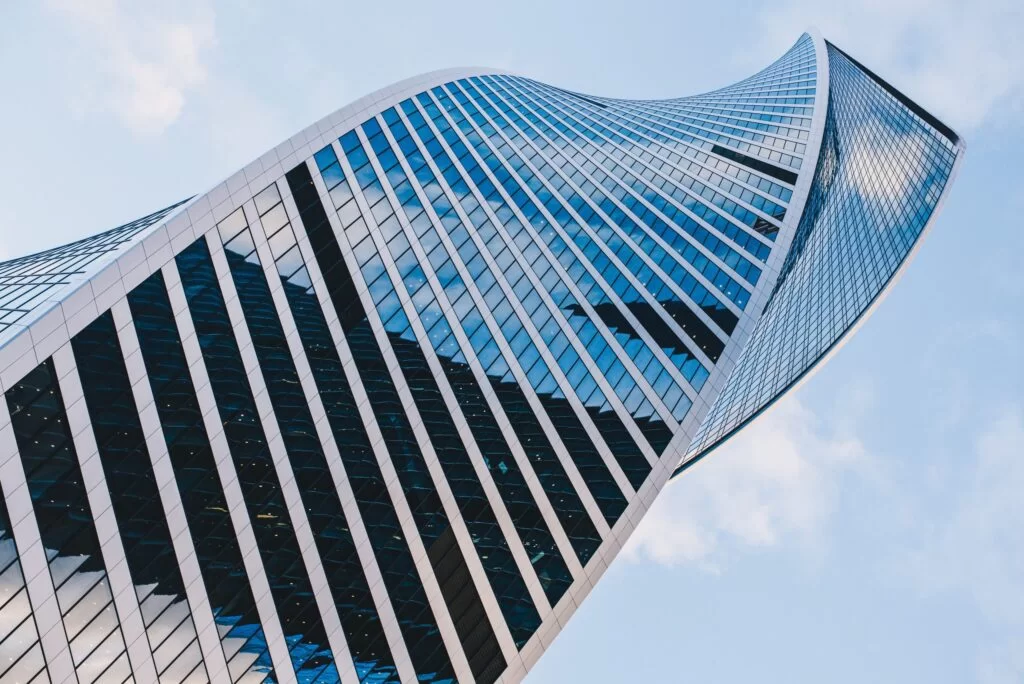
Best Glass Skyscrapers in the US: A Technical & Architectural Guide
The skyline of the United States has undergone a fundamental material transformation over the last century, moving from the heavy masonry of the Beaux-Arts and Art Deco eras toward an era defined by transparency and light. This evolution is not merely an aesthetic preference; it represents a sophisticated convergence of structural engineering, material science, and climate control. Best Glass Skyscrapers in the US. Glass, once the most fragile component of a building’s envelope, has been reimagined as a load-sharing, energy-regulating skin that allows for unprecedented verticality and interior openness.
To evaluate the most significant glass towers is to look past the superficial shimmer of the curtain wall. We must analyze how these structures interact with their urban microclimates, how they manage the immense solar gain inherent in transparent volumes, and how they navigate the structural requirements of wind oscillation and seismic resilience. A glass skyscraper is a paradox—a massive, rigid structure that must simultaneously behave like a fluid, breathing membrane.
The criteria for excellence in this field have shifted. High-performance glazing, structural silicone, and bird-safe frit patterns are now as critical to a building’s pedigree as its total height. As we examine the landscape of American verticality, we see that the most successful projects are those that treat the facade not as a static barrier, but as a dynamic participant in the building’s metabolic life. This analysis moves beyond “tallest” lists to identify the definitive benchmarks of glass architecture in the 21st century.
Understanding “best glass skyscrapers in the US”
The classification of the best glass skyscrapers in the US is often oversimplified by casual observers who prioritize visual drama or total height. However, a multi-perspective engineering and editorial view suggests that “best” is a multi-variant metric. A building that appears stunning at sunset might be a failure of building science if its reflectivity creates urban heat islands or if its cooling loads are unsustainable. True excellence requires a balance between tectonic expression and operational efficiency.
One major misunderstanding in the public sphere is that a glass building is inherently “less green” than a masonry building. While glass has historically been a poor insulator, modern triple-pane units with low-emissivity (low-e) coatings and argon gas fills can achieve R-values that were previously impossible. Thus, evaluating these structures requires an understanding of their U-values and Solar Heat Gain Coefficients (SHGC). The risk of oversimplification lies in ignoring the “embodied carbon” of the glass manufacturing process versus its “operational carbon” savings through natural daylighting.
Furthermore, the “best” towers are those that resolve the tension between transparency and privacy, or between light and glare. A skyscraper like the Willis Tower (Sears Tower) might be iconic, but its glass technology belongs to a different era than the ultra-clear, low-iron glass used in newer New York or Chicago “supertalls.” To categorize these buildings accurately, we must look at the innovation of the glazing system—whether it is a unitized curtain wall, a point-supported facade, or a double-skin system that utilizes a thermal chimney effect.
Historical Context: The Path to Total Transparency
The journey toward the modern glass skyscraper began with the 19th-century conservatories of Europe, but it was perfected in the American Midwest. The Reliance Building in Chicago (1895) was an early pioneer, using “Chicago windows” to maximize light. However, the true material shift occurred in the post-WWII era with the Lever House (1952) in New York, which introduced the non-load-bearing curtain wall.
This historical evolution was driven by the invention of the float glass process by Alastair Pilkington in 1952, which allowed for the mass production of perfectly flat, large-format sheets. Before this, glass had visual distortions that made large facades look “wavy.” The 1970s energy crisis forced the next evolution: the development of thin-film coatings that reflect infrared heat while allowing visible light to pass through. Today, we have entered the “Structural Glass” era, where glass is no longer just an infill but can serve as a primary structural element in podiums and entrances.
Conceptual Frameworks for Evaluating Vertical Glass
1. The Adaptive Envelope Model
This framework views the facade as an organ rather than a wall.
-
Application: Towers that use electrochromic (smart) glass that tints automatically based on the sun’s position.
-
Limit: The high cost of electrical integration and the lifespan of the chemical components within the glass.
2. The Biophilic Integration Framework
This model evaluates how glass skyscrapers reconnect urban dwellers with natural light cycles.
-
Application: Prioritizing buildings with high Visual Light Transmittance (VLT) that reduce the need for artificial interior lighting.
-
Limit: High VLT often competes with the need for low SHGC to prevent overheating.
3. The Structural Redundancy Model
Specifically for glass-heavy structures, this assesses the “post-breakage” stability of the system.
-
Application: Evaluating the use of laminated SentryGlas in fins and floors.
-
Limit: Adds significant weight to the building’s steel or concrete skeleton.
Categorization of High-Performance Facades
Glass skyscrapers are categorized by their assembly method, which dictates their performance and cost.
| Category | Typical Assembly | Trade-off | Example Location |
| Unitized Curtain Wall | Factory-assembled panels | High speed, high cost | One World Trade, NY |
| Double-Skin Facade | Two layers with air gap | High insulation, high floor-space loss | 181 Fremont, SF |
| Stick System | Site-assembled components | Low cost, high labor risk | Low-rise office parks |
| Point-Supported | Bolted/Spider fixings | Maximum clarity, high stress | Lobby/Podium areas |
| Structural Silicone | Chemical bonding | Clean aesthetic, difficult to repair | Salesforce Tower, SF |
Detailed Real-World Case Studies Best Glass Skyscrapers in the US
1. One World Trade Center, New York
The facade of One WTC is a masterclass in safety and optics. It utilizes massive, 13-foot-tall glass panels that are blast-resistant yet maintain a high degree of transparency. The building uses “low-iron” glass, which removes the green tint typical of standard glass, ensuring that the sky’s reflection remains true to color.
-
Failure Mode Prevented: The unitized system was designed to handle the intense wind pressures at the 1,776-foot summit without “oil-canning” (visual warping of the glass).
2. Salesforce Tower, San Francisco
This tower demonstrates the “curved glass” evolution. Instead of flat panes meeting at sharp angles, the tower utilizes radius-cut glass to create a soft, obelisk shape.
-
Decision Point: The design team had to choose between “cold-bent” glass (cheaper but under permanent stress) or “kiln-formed” glass (expensive but stress-free). They opted for a combination that optimized the budget while ensuring seismic resilience.
3. Willis Tower (Modern Retrofit), Chicago
While an old icon, its recent glazing retrofits represent a trend in American skyscrapers: upgrading the envelope for the modern era. Replacing single-pane or early double-pane glass with modern low-e units has reduced the building’s energy consumption by double-digit percentages.
Economics of Transparency: Costs and Resource Dynamics
The financial planning for a glass skyscraper is a game of “First Cost” vs. “Lifecycle Cost.”
| Expense Type | Range (Estimated) | Economic Logic |
| Specialized Low-E Coating | +$15 – $30 /sqft | Pays for itself in 7 years through HVAC savings. |
| Acoustic Interlayers | +$10 – $20 /sqft | Critical for residential skyscrapers in noisy cities. |
| Bird-Safe Frit | +$5 – $15 /sqft | Increasingly mandated by city laws (e.g., NYC Local Law 15). |
| Replacement Access | 2-5% of project | Building Maintenance Units (BMUs) are huge capital assets. |
Advanced Tools and Support Systems
-
Building Maintenance Units (BMUs): These are the cranes on the roof. In modern towers, these must be able to reach around complex geometries (like the “jags” in 111 West 57th St).
-
Spectrophotometers: Used on-site to verify that the glass delivered matches the color and performance of the approved mockup.
-
Dynamic Glazing Controls: Sensors that track the sun and adjust internal shades or tinting in real-time.
-
Desiccant Management: In IGUs, the “spacer” between glass panes must contain a desiccant that survives 30+ years to prevent internal fogging.
The Risk Landscape: Thermal Stress and Structural Fatigue
A glass skyscraper faces a unique set of compounding risks.
-
Thermal Breakage: If a pane is partially shaded while the rest is in direct sun, the temperature differential can cause a crack. This is common in “high-performance” tinted glass.
-
Seal Failure: The primary and secondary seals of an insulated glass unit are under constant pressure from wind and temperature. Once they fail, the window loses its insulation value and turns cloudy.
-
Reflective Glare (The “Death Ray” Effect): Concave glass shapes can focus sunlight onto the street below, melting car parts or causing fires. This requires careful ray-tracing analysis during the design phase.
Governance, Maintenance, and Long-Term Adaptation
A skyscraper is only as good as its maintenance regime.
-
Annual Visual Audits: Looking for “iridescence,” which indicates moisture is entering the glass laminate.
-
Reglazing Procedures: Modern towers are designed so that a single broken pane can be replaced from the outside using the BMU without disturbing the tenants inside.
-
Gasket Replacement: Most EPDM gaskets have a 25-30 year lifespan, meaning many 1990s skyscrapers are now due for “re-gasketing” to prevent air leaks.
Common Misconceptions and Industry Myths
-
Myth: “All glass buildings are bird killers.”
-
Correction: Modern skyscrapers use UV-reflective patterns or ceramic frits that are invisible to humans but highly visible to birds.
-
-
Myth: “Blue glass is better for cooling.”
-
Correction: Color is often aesthetic; the actual performance comes from the microscopic metal oxide coatings on the #2 surface of the glass.
-
-
Myth: “Glass buildings are cold in the winter.”
-
Correction: With “warm-edge” spacers and triple glazing, the interior surface of the glass stays very close to room temperature.
-
Conclusion
The best glass skyscrapers in the US are those that successfully navigate the boundary between human comfort and structural daring. As we move further into the 21st century, the focus will shift from “tall” to “smart.” The integration of photovoltaics into the glass skin (BIPV) and the perfection of vacuum-insulated glass (VIG) will allow these towers to become net-energy producers rather than consumers. Transparency is no longer just about the view; it is about the sophisticated management of the building’s interaction with the sun, the wind, and the city.