How to Reduce Glass Facade Maintenance Cost: A Strategic Editorial
The modern skyline is an architectural testament to the versatility of glass. However, the move toward total transparency has introduced a recurring financial burden for facility managers and property owners: the compounding expense of facade upkeep. A glass curtain wall is a high-performance membrane that is constantly assaulted by UV radiation, particulate matter, atmospheric pollutants, and thermal cycling. How to Reduce Glass Facade Maintenance Cost. When these variables are not managed through a proactive structural lens, the resulting expenditure can become a significant percentage of a building’s total operating budget.
The challenge of managing these costs is not merely a matter of hiring more efficient cleaning crews. It is a multi-dimensional engineering problem that begins at the conceptual design phase and extends through decades of facility governance. True efficiency in this sector requires an understanding of material science, specifically how hydrophobic and hydrophilic coatings interact with local environmental particulates. It also requires a sophisticated grasp of access logistics—the mechanical systems that allow technicians to interface safely with the building’s skin.
In an era where “ESG” (Environmental, Social, and Governance) criteria dictate the valuation of commercial real estate, the durability and cleanliness of a facade have become proxies for the overall health of the asset. A neglected facade does more than just obscure views; it leads to seal degradation, thermal leakage, and, eventually, terminal failure of the glazing units. This editorial deconstructs the systemic drivers of facade expenses and provides a definitive framework for asset preservation.
Understanding “how to reduce glass facade maintenance cost”
To effectively address how to reduce glass facade maintenance cost, one must look past the surface level of cleaning. In professional asset management, “maintenance” encompasses the structural integrity of the gaskets, the chemical stability of the glass coatings, and the mechanical reliability of the Building Maintenance Units (BMUs). A common misunderstanding is the belief that reducing the frequency of cleaning directly translates to cost savings. In reality, allowing pollutants like sulfuric acid or bird guano to sit on a glass surface can lead to permanent etching, requiring a total replacement that far exceeds the cost of a quarterly wash.
Oversimplification in this sector often involves treating the facade as a static element. Instead, it should be viewed as a dynamic system subject to “wear-and-tear” just like an HVAC system or an elevator. The “best” maintenance plans are those that integrate predictive analytics—using local weather patterns and air quality indices to determine exactly when a cleaning or a seal inspection provides the highest ROI.
Furthermore, the geographical context dictates the strategy. A strategy that works for a glass tower in the arid, sandy environment of Dubai would be financially disastrous for a similar structure in the humid, salt-heavy atmosphere of Singapore. Therefore, the “how” of cost reduction is always a localized negotiation between the building’s physical properties and its environmental stressors.
The Systemic Evolution of Facade Upkeep
Historically, facade maintenance was a brute-force endeavor. Early skyscrapers utilized “window washers” on simple wooden planks suspended by hemp ropes. The glass was basic float glass, and the primary goal was visibility. There was little thought given to the chemical longevity of the glass or the thermal performance of the seals.
The mid-20th century shift toward the “International Style”—characterized by vast, flat planes of glass—created a crisis in maintenance logistics. This led to the development of integrated rail systems and permanent roof-mounted cranes. Suddenly, the building’s architecture had to accommodate the machinery required to clean it.
In the 21st century, we have moved into the era of “Smart Facades.” Modern glazing utilizes microscopically thin layers of metal oxides (Low-E) and photocatalytic coatings. Titanium dioxide coatings, for instance, use UV light to break down organic dirt, which is then washed away by rainwater. This systemic evolution has shifted the budget from “Labor” toward “Technology,” allowing for a significant reduction in man-hours while increasing the functional lifespan of the glass units.
Conceptual Frameworks for Lifecycle Management
Professionals use specific mental models to evaluate the efficiency of a facade’s maintenance plan.
The “Self-Cleaning” Paradox
This framework acknowledges that while photocatalytic glass reduces cleaning frequency, it requires specific environmental triggers (UV light and rain) to function. If a building is in a shaded urban canyon or a drought-prone region, the high initial cost of this glass will never be recovered through maintenance savings.
The Access-Utility Model
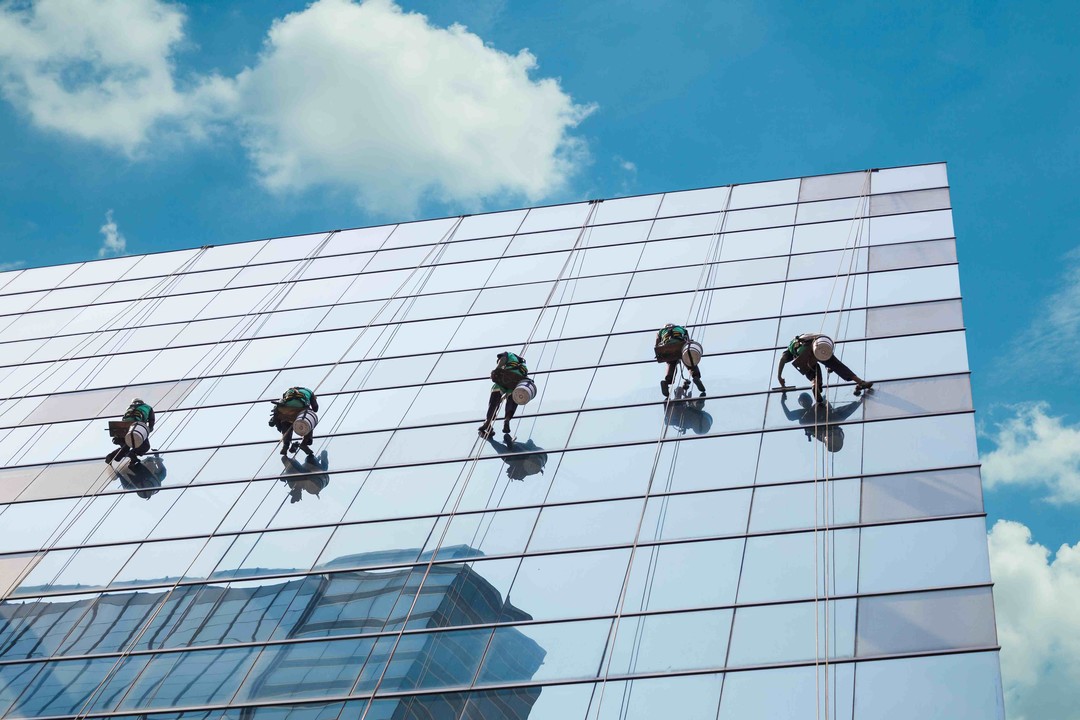
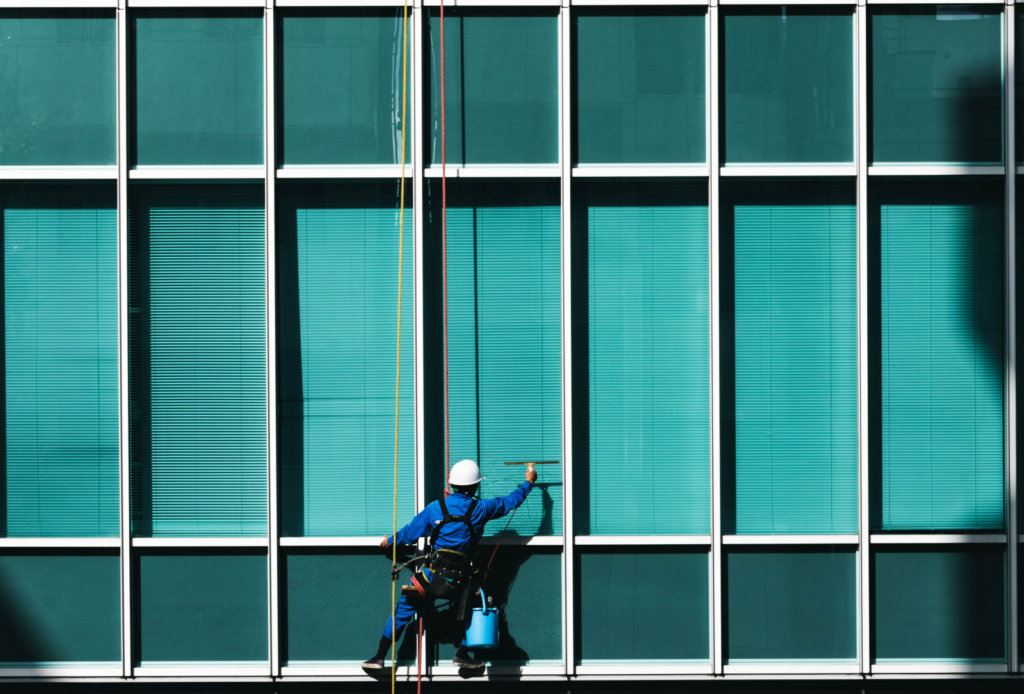
This model posits that maintenance cost is inversely proportional to the ease of access. A facade designed with integrated walkways or “davits” that allow for rapid deployment of crews will always have a lower long-term cost than a “clean” architectural design that requires complex, custom-built cradles or expensive industrial rope access (IRA).
The Degradation Curve
All facade components—silicone, EPDM gaskets, and desiccant spacers—have a decay rate. This framework emphasizes “early intervention” to keep the system at the top of the curve, preventing the exponential cost increase that occurs once a system reaches a state of neglected failure.
Key Categories of Facade Systems and Cost Trade-offs
1. Point-Supported Glass (Spider Fittings)
Highly aesthetic with minimal framing.
-
Cost Factor: High maintenance on the “spiders” and gaskets; seals are more exposed to the elements.
2. Unitized Curtain Walls
Prefabricated panels installed as a single unit.
-
Cost Factor: Exceptional seal integrity reduces internal maintenance, but external cleaning remains standard.
3. Double-Skin Facades
Two layers of glass with an air cavity between them.
-
Cost Factor: The most expensive to maintain; four surfaces must be cleaned, and the cavity requires mechanical ventilation maintenance.
4. Stick-Built Systems
Assembled on-site.
-
Cost Factor: Higher risk of installation errors leading to early seal failure and water ingress.
Facade System Comparison Table
Detailed Real-World Scenarios How to Reduce Glass Facade Maintenance Cost
Scenario 1: The Coastal High-Rise
In salt-heavy environments, the primary maintenance cost is “corrosion management.” Salt crystals act as an abrasive. A plan that utilizes hydrophilic glass allows rain to sheet off, taking salt with it. The second-order effect is a reduction in the “clouding” of the glass, preserving the real estate value of the views.
Scenario 2: The Industrial Corridor
Buildings located near manufacturing hubs or heavy transit face “oily soot” accumulation. Standard water-based cleaning is often ineffective. The strategic intervention here involves specialized chemical pre-treatments that prevent carbon particles from bonding with the glass surface.
Scenario 3: The “Deep Canyon” Office
When a building is surrounded by taller structures, it receives little sunlight. Photocatalytic glass fails here. The maintenance cost is reduced by installing high-speed, automated robotic cleaning systems that run on permanent vertical rails, removing the need for human crews on the upper 80% of the building.
Planning, Cost, and Resource Dynamics
The economic analysis of facade maintenance must account for both direct expenditures and the opportunity costs of building downtime or tenant dissatisfaction.
Estimated Lifecycle Cost Allocation (30-Year Horizon)
Tools, Strategies, and Support Systems
-
Robotic Cleaning Units: Automated systems that traverse the facade without human pilots, significantly lowering insurance and labor costs.
-
Hydrophobic Nano-coatings: A “liquid glass” layer that makes the surface extremely slippery to water and oils.
-
Davit and Monorail Systems: Permanent structural supports that allow for the fastest possible deployment of maintenance cradles.
-
Condition Monitoring Sensors: IoT devices embedded in the frame to detect moisture or pressure changes in the air gap.
-
De-ionized Water Systems: Cleaning with “pure” water prevents streaks and mineral deposits, extending the interval between washes.
-
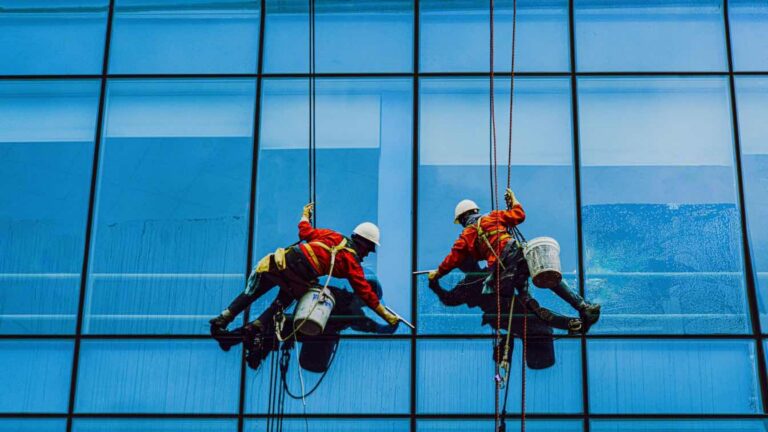
Industrial Rope Access (IRA): Utilizing specialized climbers for hard-to-reach architectural features where cranes cannot reach.
Risk Landscape and Failure Modes
The “Risk Taxonomy” for glass facades involves several compounding factors:
-
Nickel Sulfide (NiS) Inclusions: Spontaneous breakage of tempered glass that can cause a cascading safety hazard and massive unbudgeted replacement costs.
-
Sealant Reversion: When low-quality silicone breaks down back into a liquid state, destroying the unitized seal and causing “fogging.“
-
Galvanic Corrosion: If the glass fittings use dissimilar metals without a separator, the structural support will eventually fail.
-
Shadow Etching: Permanent marks left on the glass from poorly designed shading fins or neighboring reflections.
Governance, Maintenance, and Long-Term Adaptation
A robust governance plan relies on a tiered review cycle:
-
Monthly: Visual inspection of ground-level glass and high-traffic entry points for signs of stress or seal creep.
-
Bi-Annually: Full cleaning cycle paired with a “close-up” inspection of the silicone joints by the cleaning crew (trained as observers).
-
Quinquennial (Every 5 Years): Detailed structural audit of the BMU anchors and the structural silicone of the curtain wall.
Measurement, Tracking, and Evaluation
-
Leading Indicator: The “Surface Energy” of the glass. Using a contact-angle meter to see if water still beads as intended. If the angle changes, the coating has failed.
-
Lagging Indicator: The number of “Service Orders” for internal leaks or window fogging.
-
Qualitative Signal: Tenant feedback regarding glare or thermal discomfort, which may indicate that the reflective coatings have degraded.
Common Misconceptions and Strategic Oversimplifications
-
“Self-cleaning glass means no cleaning.” It actually means “less frequent cleaning” and usually only on the exterior surface.
-
“Rain is a free wash.” Rain in urban areas is often acidic and carries pollutants that can bake onto the glass.
-
“All silicone is the same.” Using non-structural silicone for structural repairs is a terminal error.
-
“Access systems are an afterthought.” If you don’t design the building for a crane, you will pay a 400% premium for rope access for the life of the building.
-
“A clear window is a healthy window.” A window can look perfectly clear while its seal is 90% compromised.
-
“Coatings last forever.” Most aftermarket nano-coatings require re-application every 3 to 7 years.
Synthesis and Final Editorial Judgment
The strategy for how to reduce glass facade maintenance cost is found at the intersection of architectural foresight and chemical intelligence. The most cost-effective buildings are those that concede the inevitability of environmental degradation and design for easy, frequent, and low-impact intervention.
By prioritizing “warm edge” spacers, unitized systems with high-quality gaskets, and integrated mechanical access systems, a developer can effectively cap the operational expenditure of the facade. In the final analysis, the goal is not to eliminate maintenance, but to move from “reactive crisis management” to a state of “predictive equilibrium.” The glass facade should not be an unpredictable liability; it should be a well-governed asset that preserves both the clarity of the vision and the integrity of the balance sheet.