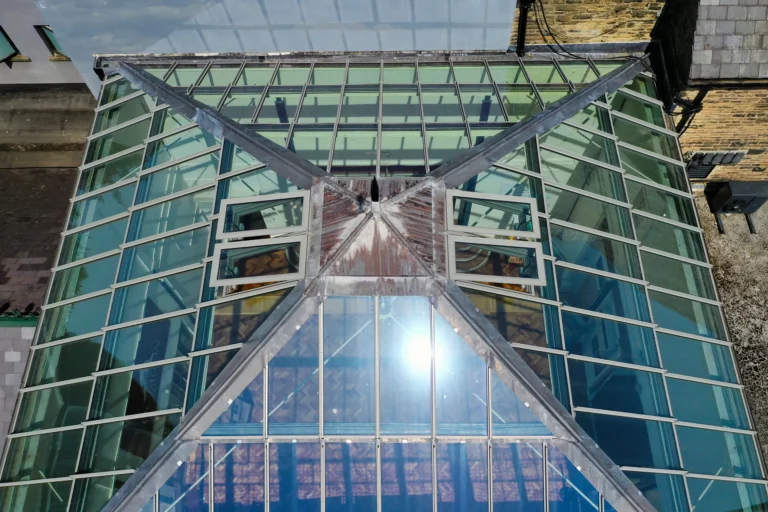
Common Glass Installation Mistakes: A Definitive Guide for Pros
The installation of glass in modern construction is an exercise in managing extreme tolerances. While glass is often perceived through the lens of its aesthetic clarity, from a structural and mechanical standpoint, it is a rigid, unforgiving material that operates within a strict set of physical boundaries. Common Glass Installation Mistakes. Unlike timber or steel, which can deform slightly to accommodate shifting loads or thermal expansion, glass reacts to improper handling or installation errors with immediate or delayed fracture. This fragility necessitates a highly disciplined approach to site management and execution.
In the current architectural landscape, where larger spans and minimal framing are increasingly favored, the margin for error has narrowed significantly. An oversight during the setting of a glass panel—perhaps a slight misalignment of a setting block or a failure to account for edge clearance—can initiate a sequence of stresses that may not manifest for months or even years. These latent defects represent a significant liability for developers and a safety risk for occupants, yet they are often the result of preventable systemic lapses rather than material defects.
Addressing the technical reality of glass placement requires moving beyond basic safety guidelines and into the realm of precision engineering. One must consider the chemistry of sealants, the physics of thermal gradients, and the mechanical dynamics of building movement. By identifying the root causes of failure, professionals can develop a more robust methodology for oversight. This analysis examines the most prevalent errors in the field, providing a framework for understanding how minor deviations in the installation phase lead to catastrophic outcomes in the operational phase.
Understanding “common glass installation mistakes”
When discussing common glass installation mistakes, it is a mistake in itself to view these errors as mere accidents. Most installation failures are the logical conclusion of a breakdown in the communication between the specification and the field. For instance, a common misunderstanding involves the “setting block”—the small rubber or plastic shim that supports the weight of the glass. If these blocks are positioned too far from the corners, the glass may sag or “creep”; if they are too close, they can impede the drainage of the glazing pocket, leading to seal failure in insulated units.
Oversimplification in the glazing industry often leads to the “universal application” error. This is the assumption that a technique used for a standard 1/4-inch monolithic pane is applicable to a 2,000-pound triple-glazed unit. The physics of heavy glass requires different considerations for shore hardness in blocks and specific suction-cup lift ratings. Furthermore, many mistakes are rooted in the failure to account for the “dynamic building,” where the glass is stationary but the frame expands and contracts due to temperature shifts or floor-to-floor deflection.
Avoiding these errors requires a multi-perspective approach. To a glazier, a mistake might be a scratched surface; to a structural engineer, it is a point-load stress concentration at a bolt hole; to a building scientist, it is a compromised air-vapor barrier at the perimeter. A comprehensive strategy for glass integrity must address all three layers of risk simultaneously.
Evolution of Glazing Precision
Historically, glass installation was a trade of putty and wooden sashes. The flexibility of traditional glazing compounds allowed for significant “play,” as the glass was relatively small and light. The shift toward modern curtain walls and structural glazing in the late 20th century transformed the glazier’s role into that of a high-tolerance technician.
As glass sizes grew, the industry moved from “wet glazing” (using bulk sealants) to “dry glazing” (using EPDM or silicone gaskets). This transition reduced the mess but increased the requirement for framing precision. Today, we are seeing the rise of “structural silicone glazing” (SSG), where the glass is held to the building entirely by chemical bonds. In this environment, the “mistake” is no longer just a leak; it is a structural detachment. This evolution has made the cleanliness of the installation environment—traditionally a secondary concern—a primary factor in structural safety.
Mechanical Frameworks and Site Logic
1. The Clearance-to-Movement Framework
Glass must “float” within its frame. The “edge clearance” is the gap between the glass edge and the frame.
-
Application: Installers must calculate the maximum expected thermal expansion of the aluminum frame and ensure the gap is wide enough to prevent “glass-to-metal” contact at peak temperatures.
-
Limit: Excessive clearance can lead to insufficient “bite” (the amount of glass covered by the frame), risking wind-load blowouts.
2. The Drainage/Weep Path Model
Most insulated glass unit (IGU) failures are caused by “wet-footing”—when the bottom edge of the glass sits in water.
-
Application: Every glazing system must have a clear path for water to exit the pocket.
-
Limit: Weep holes are often accidentally blocked by sealants or misaligned gaskets during the rush of installation.
3. The Compatibility Matrix
Not all silicones and gaskets are compatible.
-
Application: Installers must verify that the sealant used to finish the joint does not chemically attack the secondary seal of the IGU or the laminated interlayer.
-
Limit: Physical evidence of incompatibility (leaking oil or yellowing) may take three to five years to appear.
Primary Failure Categories and Technical Trade-offs
| Error Category | Impact on Performance | Long-term Consequence | Prevention Strategy |
| Edge Damage | Reduced structural strength | Delayed spontaneous breakage | Use of edge-protection during transport |
| Improper Blocking | Misalignment/Strain | Seal failure in IGUs | Precise placement at 1/8th points |
| Sealant Contamination | Poor adhesion | Water infiltration/Structural failure | Solvent cleaning and primer use |
| Gasket Over-compression | Frame stress | Gasket “creep” and gaps | Torque-limited installation tools |
| Inadequate Shimming | Uneven load distribution | Stress fractures at corners | Use of high-density plastic shims |
Decision Logic for Field Correction
When an installer encounters a frame that is “out of square,” the logic usually defaults to “making it fit.” This is where the most critical common glass installation mistakes occur. The correct decision logic should be:
-
Measure Variance: Is the frame deviation within the allowable tolerance (e.g., 1/8 inch over 10 feet)?
-
Verify Bite: If we center the glass, is there still enough edge coverage to satisfy wind-load requirements?
-
Reject or Adjust: If the bite is compromised, the frame must be reworked before glass is set.
Analytical Real-World Scenarios Common Glass Installation Mistakes
Scenario A: The Point-Supported Glass Fin
A series of 15-foot glass fins are being installed to support a lobby facade.
-
The Error: The installer uses a steel wrench to tighten the through-bolts without a torque gauge, and forgets the nylon bushing between the bolt and the glass.
-
The Failure Mode: The metal-on-glass contact creates a microscopic “bruise” on the hole’s edge. Six months later, a cold snap causes the fin to contract, and the stress concentration at the bruise causes the entire fin to shatter.
Scenario B: The Sloped Glazing Ponding
Glass is installed on a skylight with a minimal 2-degree pitch.
-
The Error: The horizontal caps are installed “proud,” meaning they sit slightly higher than the glass surface.
-
The Failure Mode: This creates a “dam” that holds water at the bottom edge of the glass. The constant immersion degrades the IGU seal, leading to permanent fogging and internal mold within the unit.
Resource Dynamics: The Economics of Precision
The cost of avoiding mistakes is often found in labor time and specialized equipment.
| Resource | Direct Cost | Indirect Value | Opportunity Cost of Neglect |
| Digital Level/Laser | $500 – $1,200 | Eliminates “eye-balling” frames | Future structural rework |
| Suction Lifting Rigs | $200 – $1,500/day | Prevents edge chips and back strain | Catastrophic drop risk |
| Field Adhesion Tests | $50 / test | Verified structural bond | Entire facade replacement |
| On-site Supervision | $80 – $150 /hr | Real-time error correction | Warranty claim litigation |
Support Systems and Strategic Oversight
To mitigate common glass installation mistakes, a project must move beyond the “one-glazier-one-pane” model.
-
Vacuum Tracking: High-end projects use vacuum gauges on lifting equipment that log every lift to ensure no pane was subjected to excessive suction-related stress.
-
Adhesion Logbooks: Documenting the cleaning process (Two-Cloth Method) and the batch numbers of the sealants used.
-
Glazing Pocket Audits: Before the glass is set, a third-party inspector verifies that all weep holes are clear and that no screws or fasteners are protruding into the glazing channel.
-
Thermal Modeling: On-site verification that the glass orientation matches the thermal stress analysis provided by the manufacturer.
The Risk Landscape: Compounding Latent Defects
Mistakes in glass installation are rarely “singular.” They usually compound. For example, a slightly chipped edge (Error 1) might be harmless until it is placed in a frame with insufficient thermal clearance (Error 2). When the sun hits the glass, the pane expands, hits the frame, and the stress finds the chip, resulting in a “thermal break.” This taxonomy of failure highlights that “luck” is often the only thing preventing a mistake from becoming a disaster in the first year of a building’s life.
Governance and Maintenance Protocols
Long-term success depends on a “Handover Protocol” that acknowledges the installation’s limits.
-
Sealant Review Cycle: Structural silicone should be inspected every 5 years for “chalking” or loss of elasticity.
-
Drainage Clearing: Weep holes must be vacuumed annually to prevent dust and debris from creating the aforementioned “wet-footing” condition.
-
Torque Verification: On point-supported structures, bolts should be periodically checked with torque wrenches to ensure building settlement hasn’t overloaded specific points.
Measurement, Tracking, and Evaluation
Evaluating the quality of an installation requires objective data.
-
The Butterfly Test: Checking for visual distortions that indicate the glass is being pinched or bowed by the frame.
-
Infrared Thermography: Identifying air leaks around the glass perimeter that suggest a failed or missing gasket.
-
Deflection Testing: Applying a controlled load to a glass railing or floor to ensure it moves as the engineers predicted.
Common Misconceptions
-
Myth: “A little bit of edge chipping is normal.”
-
Correction: Any chip on a tempered or heat-strengthened edge is a potential failure point.
-
-
Myth: “Silicone sticks to everything.”
-
Correction: Silicone will not bond to certain anodized finishes or dusty surfaces without proper priming.
-
-
Myth: “If it doesn’t leak during the first rain, it’s a good install.”
-
Correction: Many leaks are “internal,” where water enters the frame and rots the sub-structure without appearing inside the building.
-
Conclusion
The pursuit of transparency in architecture is a battle against the inherent limitations of a brittle material. Avoiding common glass installation mistakes is not about achieving perfection, but about respecting the physics of the assembly. By institutionalizing better blocking practices, ensuring chemical compatibility, and maintaining strict edge clearances, the glazing industry can provide structures that are as durable as they are beautiful. The ultimate goal is to ensure that the glass serves as a silent, reliable barrier, free from the latent stresses of a rushed or uncoordinated installation.