How to Plan Atrium Glazing on a Budget: A Strategic Engineering
The architectural atrium represents a unique intersection of aesthetic ambition and structural necessity. While these soaring glass-enclosed spaces provide vital natural light and a sense of openness, they are historically associated with prohibitive capital expenditures. How to Plan Atrium Glazing on a Budget. The challenge for modern developers and architects is not merely the procurement of glass, but the orchestration of environmental control, structural support, and life-cycle maintenance within a restricted financial envelope.
True efficiency in large-scale glazing projects is rarely achieved through the simple selection of the cheapest components. Instead, it emerges from an integrated design process where the thermal properties of the glass, the orientation of the building, and the mechanical requirements of the HVAC system are balanced. When considering how to plan atrium glazing on a budget, one must shift from a “cost-per-unit” mindset to a “performance-per-dollar” framework.
This analysis moves beyond surface-level cost-cutting measures, examining the systemic variables that drive up glazing expenses. From the physics of span-to-weight ratios to the nuances of spectral selectivity in coatings, we will explore how strategic planning can produce high-performance glass structures that remain financially viable without compromising safety or durability.
Understanding “how to avoid glazing seal failure”
At the heart of any successful architectural endeavor is the clarity of objective. When asking how to plan atrium glazing on a budget, stakeholders often fall into the trap of focusing exclusively on the glass itself. In reality, the budget is frequently consumed by the secondary steel required to support that glass or the mechanical systems needed to offset the greenhouse effect.
A common misunderstanding is that “budget” implies “low quality.” In the context of atrium glazing, a budget-conscious plan is one that minimizes custom engineering. Standardized glass sizes and off-the-shelf framing systems can reduce costs by 30% or more compared to bespoke, curved, or oversized units. The oversimplification risk here is failing to account for the “total cost of ownership,” where a cheaper initial glazing system leads to astronomical cooling bills or early seal failure due to improper structural loading.
Planning on a budget requires a multi-perspective view: the structural engineer sees weight and wind load; the MEP (mechanical, electrical, plumbing) engineer sees heat gain and loss; and the owner sees capital outlay versus rental value. A successful budget plan harmonizes these views by selecting materials that solve multiple problems simultaneously—such as glass that provides both structural rigidity and high thermal insulation.
Deep Contextual Background
The evolution of the atrium can be traced from the open-air courtyards of antiquity to the Victorian iron-and-glass conservatories, like the Crystal Palace. Historically, these structures were inefficient, prone to leaks, and thermally volatile. The mid-20th century introduced the “curtain wall,” which decoupled the building’s skin from its structural frame, allowing for the massive expanses of glass we see today.
The current systemic shift is toward “high-performance” glazing. As energy codes become more stringent, the “budget” for an atrium is now legally bound by its carbon footprint and energy efficiency. We are no longer just planning a roof; we are planning a transparent thermal engine. The modern budget-conscious approach utilizes advanced computer modeling to reduce the amount of material needed, moving away from the “over-engineering” common in the previous century.
Conceptual Frameworks and Mental Models
1. The Span-Cost Correlation
The cost of glazing increases exponentially, not linearly, with the distance between supports.
-
The Model: By introducing intermediate supports—even if they slightly obstruct the view—the thickness and cost of the glass can be drastically reduced.
-
Limit: Too many supports increase labor costs and aesthetic clutter, eventually hitting a point of diminishing returns.
2. The Integrated Thermal Envelope
This model treats the atrium as a heat exchanger rather than a static space.
-
The Model: Investing 10% more in high-performance coatings (Low-E) can reduce the necessary size of the building’s chiller plant by 20%.
-
Limit: Coatings have limits on “Visible Light Transmittance” (VLT); too much coating makes the atrium feel dark and gloomy.
3. The Modular Iteration
Standardization is the primary tool for budget control.
-
The Model: Using the standard 5’x10′ or 4’x8′ glass sheets produced by manufacturers avoids the heavy surcharges associated with custom cuts.
-
Limit: This may limit the “iconic” nature of the architecture, requiring creative framing to achieve visual interest.
Key Categories and Variations
Selecting the right glazing system involves a series of trade-offs between performance, weight, and price.
Comparison of Atrium Glazing Systems
| System Type | Cost Rank | Structural Support | Best Use Case | Primary Drawback |
| Stick-Built Curtain Wall | Low | Heavy Aluminum/Steel | Vertical walls | High site labor cost |
| Unitized Glazing | Moderate | Integrated | Large-scale high-rises | High shipping/logistics cost |
| Point-Supported (Spider) | High | Minimal/Glass Fins | High-end lobbies | Extremely high engineering cost |
| ETFE Cushions | Low/Moderate | Very Light Steel | Sports arenas/Large spans | Low acoustic insulation |
| Polycarbonate Panels | Lowest | Light Framing | Industrial/Greenhouses | Poor long-term UV resistance |
The decision logic here usually points toward Stick-Built systems for those prioritizing a lower initial budget, as the parts are standardized and the engineering is well-understood by most contractors.
Detailed Real-World Scenarios How to Plan Atrium Glazing on a Budget
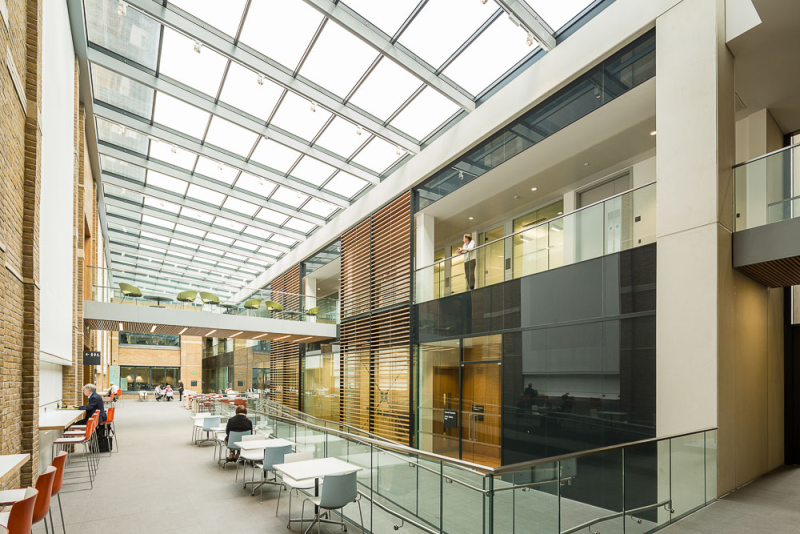
Scenario 1: The Suburban Office Atrium
A three-story building requires a central light well.
-
Constraint: Strict budget; must use local contractors.
-
Decision: Utilizing a standard aluminum storefront system adapted for sloped glazing rather than a custom steel-supported system.
-
Result: Reduced engineering fees but required a slightly steeper pitch to ensure water runoff.
Scenario 2: The Adaptive Reuse Project
Converting an old warehouse courtyard into an enclosed atrium.
-
Constraint: Existing masonry cannot handle heavy new loads.
-
Failure Mode: If heavy triple-pane glass is used, the masonry may crack.
-
Alternative: Using ETFE (ethylene tetrafluoroethylene) cushions, which weigh about 1% of the weight of glass, allowing for a much lighter and cheaper supporting structure.
Planning, Cost, and Resource Dynamics
Budgeting for an atrium requires an understanding of indirect costs, such as the rental of specialized cranes or the insurance premiums for high-altitude glass installation.
Range-Based Cost Allocation for Budget Atriums
| Component | Budget Percentage | Variability Factors |
| Glass Units (IGUs) | 35% – 45% | Coating type, gas fill, thickness |
| Framing/Mullions | 20% – 30% | Finish (anodized vs. painted), alloy |
| Secondary Steel | 15% – 25% | Complexity of connections |
| Sealants & Gaskets | 5% – 10% | UV exposure, movement requirements |
| Logistics/Access | 10% – 20% | Site accessibility, lift equipment |
The “opportunity cost” in budget planning often surfaces in the choice of glass thickness. Thinner glass is cheaper to buy and hang, but it may require more frequent replacement if it cannot withstand local wind-load cycles.
Tools, Strategies, and Support Systems
To successfully execute a plan on a budget, one should leverage specific strategic “levers”:
-
Gravity-Driven Drainage: Design the atrium with enough slope to use simple gravity for drainage, avoiding expensive internal gutter systems.
-
Solar Orientation Analysis: Use free or low-cost BIM (Building Information Modeling) tools to orient the atrium away from the harshest afternoon sun.
-
Local Material Sourcing: Glass is heavy; shipping it 1,000 miles can double the cost. Source from local fabricators even if the unit cost is slightly higher.
-
Passive Ventilation: Incorporate operable vents at the top of the atrium to exhaust heat naturally, reducing the need for high-spec glass.
-
Simplified Geometry: Avoid complex curves. Every curve in a piece of glass can quintuple its price.
Risk Landscape and Failure Modes
Budget-focused projects are particularly susceptible to specific failure modes if corners are cut inappropriately:
-
Structural Deflection: Thinner frames may flex under snow loads, causing the glass to pop out or the seals to shear.
-
Thermal Bridging: If the framing is not thermally broken, condensation will form on the interior aluminum, potentially causing mold in the surrounding finishes.
-
Incompatible Materials: Using “generic” sealants that react poorly with the edge-seal of the IGU, leading to premature fogging.
Governance and Long-Term Adaptation
A budget atrium is only a “saving” if it doesn’t require a total overhaul in a decade. A layered maintenance checklist should be implemented:
-
Monitoring: Bi-annual inspections of the secondary steel connections for signs of corrosion or movement.
-
Adjustment Triggers: If internal temperatures exceed 85°F more than ten times a year, the strategy must pivot to adding external shading or retrospective window films.
-
Review Cycles: Every five years, assess the integrity of the perimeter sealants, as these are the most common point of moisture ingress in budget systems.
Measurement and Evaluation
Success should be measured through both qualitative and quantitative lenses:
-
Leading Indicator: The “Air Leakage Rate” of the completed system; lower than 0.06 cfm/sq ft indicates high-quality installation.
-
Lagging Indicator: The actual cooling load of the atrium space over the first three years compared to the initial energy model.
-
Qualitative Signal: Occupant comfort surveys. If the atrium is too hot to use in July, the “budget” plan has failed its primary purpose.
Common Misconceptions and Oversimplifications
-
Myth: “Reflective glass is the best way to save money on cooling.”
-
Correction: Reflective glass can create a “mirror” effect that bothers neighbors and can actually be less efficient than modern spectrally selective Low-E coatings.
-
-
Myth: “Polycarbonate is always cheaper than glass.”
-
Correction: While the material is cheaper, its shorter lifespan and yellowing under UV mean it may be more expensive over a 20-year period.
-
-
Myth: “Any window contractor can install an atrium.”
-
Correction: Atrium glazing requires specific knowledge of sloped-glazing water management and structural movement that standard storefront installers may lack.
-
Conclusion
Determining how to plan atrium glazing on a budget is an exercise in restraint and strategic prioritization. The most cost-effective atriums are those that work with, rather than against, the laws of physics. By standardizing components, optimizing structural spans, and viewing the glass as one part of a larger energy system, it is possible to create spaces that are both economically responsible and architecturally significant. The ultimate goal is a structure that remains transparent and weather-tight for decades, proving that a well-considered budget is not a limitation, but a catalyst for smarter engineering.