Best Glass Facade Options: An Engineering & Architectural Guide
The contemporary urban skyline is increasingly defined by its relationship with transparency, a tectonic shift that has moved the building envelope from a passive structural boundary to an active, high-performance membrane. This transition from heavy masonry to expansive glazing represents one of the most significant engineering evolutions in the history of architecture. Best Glass Facade Options. To evaluate the selection of a facade is not merely to choose an aesthetic; it is to engage with a complex metabolic system that dictates the building’s energy consumption, occupant wellness, and long-term structural integrity.
As density increases and climate mandates tighten, the criteria for selecting glazing systems have moved beyond simple visual light transmittance. Engineers and architects now navigate a landscape where glass must behave like a semiconductor—managing solar heat gain, harvest natural light, and resisting extreme wind pressures simultaneously. The decision-making process is fraught with technical trade-offs: the desire for maximum clarity often competes with the necessity of thermal insulation, while the pursuit of minimal framing increases the complexity of structural load paths.
The following analysis moves past surface-level summaries to dissect the mechanical, economic, and systemic layers of modern glazing. By treating the building skin as a sophisticated piece of technology rather than a static material, we can identify the configurations that offer genuine resilience. This definitive reference explores the frameworks required to master the vertical landscape, ensuring that the transparency of a structure remains a long-term asset rather than a liability in an era of rapid environmental and regulatory change.
Understanding “best glass facade options”
The classification of the best glass facade options is often obscured by marketing terminology that prioritizes visual drama over building science. In a professional editorial context, “best” is a multi-variant metric determined by the specific intersection of microclimate, building height, and program use. A common misunderstanding among developers is the belief that a single high-performance glass type can be applied universally across all elevations. In reality, a robust facade plan requires an asymmetrical approach—specifying different coatings and solar heat gain coefficients for the southern exposure versus the northern shade.
Oversimplification in this sector frequently leads to “thermal discomfort” and “glare fatigue” for occupants. Selecting a system based solely on its R-value or U-factor without considering the Visible Light Transmittance (VLT) can result in an interior that feels cavernous or disconnected from the natural day-night cycle. The risk lies in treating glass as a commodity; true excellence in glazing involves the integration of “thermal breaks,” gas fills, and microscopic metallic coatings that allow the architect to “tune” the facade to the sun’s specific path.
Furthermore, we must address the “structural-thermal” tension. Point-fixed systems and glass fins offer unparalleled transparency but introduce significant challenges for insulation and air-sealing. Conversely, unitized curtain walls offer superior weatherproofing but can appear repetitive if not handled with editorial sensitivity. Evaluating the top options requires a multi-perspective lens that accounts for the “embodied carbon” of the glass manufacturing process against the “operational carbon” savings achieved through natural daylighting over a fifty-year lifecycle.
Contextual Background: The Evolution of the Transparent Skin
Historically, the glass facade began as an infill for masonry openings—the “window” as a puncture in the wall. The shift toward the “curtain wall” in the post-WWII era, led by icons like the Lever House and the Seagram Building, redefined the building as a steel skeleton wrapped in a non-load-bearing skin. This was the birth of the modern commercial identity, but these early systems were essentially “single-glaze” radiators that hemorrhaged heat in the winter and trapped it in the summer.
The systemic evolution of the 1970s energy crisis forced the industry to innovate, leading to the development of the Insulated Glass Unit (IGU). The introduction of a hermetically sealed air or gas gap between two panes changed the physics of architecture overnight. Since then, the trajectory has moved toward “Active Skins.” We have transitioned from standard float glass to “low-iron” glass for clarity, and from simple tints to vacuum-sputtered “soft-coat” low-emissivity (Low-E) films that are invisible to the eye but highly reflective to infrared heat. Today’s top options represent the convergence of this history with the precision of digital fabrication.
Conceptual Frameworks and Mental Models
1. The Metabolic Envelope Model
This framework views the facade not as a wall, but as a lung. It prioritizes buildings that utilize double-skin facades or automated venting to regulate temperature without total reliance on HVAC systems.
-
Limit: High initial capital expenditure and increased maintenance complexity.
2. The Total Load Path Perspective
Every selection must be viewed through how it transfers force. In point-fixed or fin-supported systems, the glass itself becomes a structural member.
-
Limit: Requires extremely high precision in manufacturing; a single millimeter of misalignment in the steel sub-structure can shatter a 1,000-lb pane.
3. The Circadian Connectivity Framework
This model evaluates glass options based on their impact on human biology. It prioritizes high VLT and color rendering indices (CRI) to ensure that the light entering the building remains “natural” despite high-performance coatings.
Key Categories and Technical Variations
Modern glazing is categorized by its assembly method and its thermal strategy. The following configurations represent the most resilient solutions currently available.
| Category | Primary Mechanical Strategy | Key Trade-off | Typical Use Case |
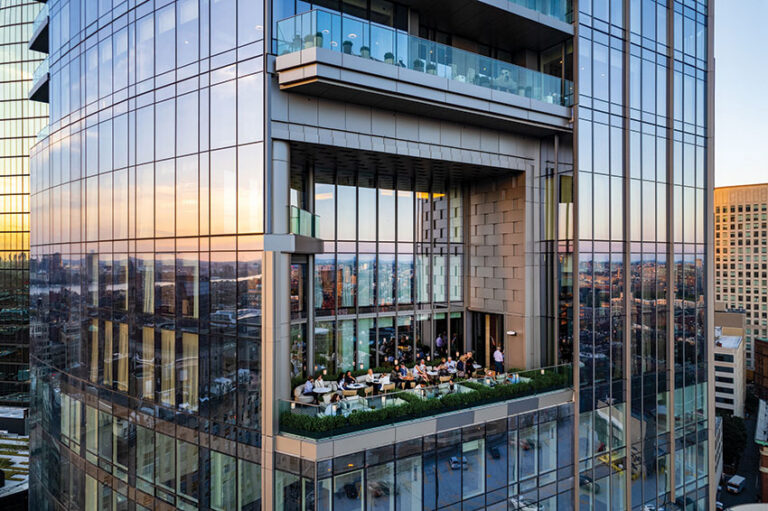
| Unitized Curtain Wall | Factory-assembled panels | High cost; fast on-site install | High-rise commercial |
| Double-Skin Facade | Two layers with a cavity | Deep facade; high floor loss | Institutional / Research |
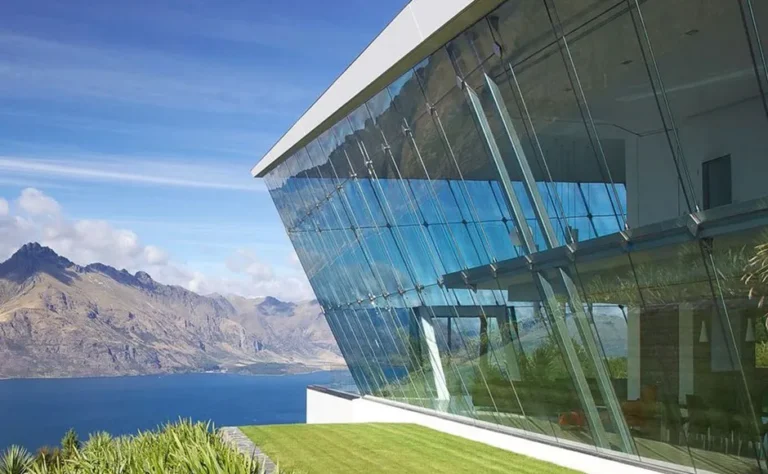
| Point-Fixed (Spider) | Bolted connections | Difficult thermal sealing | Atriums / Podiums |
| Stick System | Site-assembled components | High labor risk; low cost | Low-rise office parks |
| Structural Glass Fins | Glass-on-glass support | Extreme fragility during build | Luxury Retail / Museum |
| Electrochromic (Smart) | Active tinting | Electronic longevity risks | Tech headquarters |
Realistic Decision Logic
The selection of a category should be driven by the “risk of the site.” In high-wind zones, the unitized curtain wall is the benchmark because the seals are factory-tested and less prone to human error during installation. For a low-rise boutique project where visual purity is the priority, a point-fixed system provides the necessary “jewelry-like” detail, provided the maintenance budget accounts for the inevitable seal degradation of individual bolts.
Detailed Real-World Scenarios Best Glass Facade Options
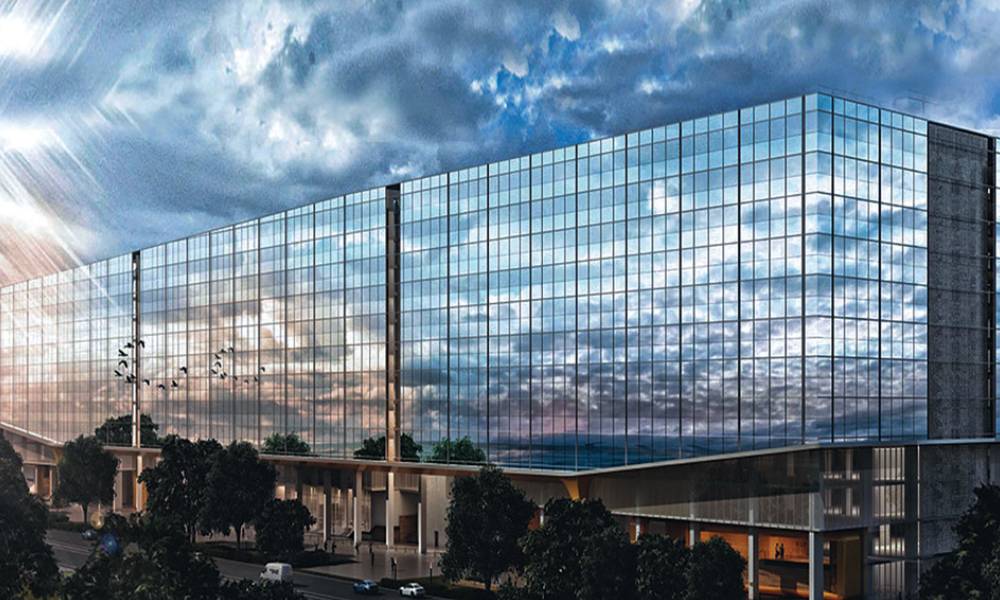
Scenario A: The High-Rise Office in a Cold Climate
The primary challenge is “thermal bridging” where the aluminum frame transfers heat out of the building.
-
The Conflict: Large glass areas are needed for leasing appeal, but energy codes are strict.
-
The Solution: Triple-pane IGUs with warm-edge spacers and thermally broken frames.
-
Failure Mode: If the frames are not correctly broken, condensation will form on the interior metal, leading to mold and localized rot.
Scenario B: The Coastal Hurricane Zone
The facade must resist the “cyclic pressure” of a storm and the impact of flying debris.
-
The Conflict: Standard glass will blow out, exposing the interior to devastating wind-pressure changes.
-
The Solution: Laminated glass with an ionoplast interlayer (e.g., SentryGlas) that remains rigid even if the glass layers shatter.
-
Second-Order Effect: The increased weight of the laminate requires a heavier structural skeleton, increasing the building’s overall foundation costs.
Planning, Cost, and Resource Dynamics
The financial planning for a glass facade is rarely about the “price per square foot” of the glass itself, but rather the “logistics of the system.”
| Cost Component | Range (Estimated) | Economic Logic |
| Specialized Soft-Coat Low-E | +$10 – $25 /sqft | Offsets long-term HVAC sizing costs. |
| Logistics (Crane/Rigging) | 15-25% of budget | Critical in dense urban sites. |
| Factory Testing (Mockups) | $50k – $250k | Essential for insurance/warranty. |
| Hardware (Spiders/Fins) | High Variability | Often the most expensive “per unit” item. |
Opportunity Cost of “Value Engineering”: Reducing the facade budget mid-project often results in “tint-shifting,” where the substituted glass has a green or blue hue that destroys the original architectural vision. More critically, it may increase the solar heat gain enough to require a total redesign of the building’s mechanical cooling plant, often costing more than the original glazing “savings.”
Tools, Strategies, and Support Systems
-
Finite Element Analysis (FEA): Essential for point-fixed systems to predict stress concentrations at the bolt holes.
-
Lidar/3D Scanning: Used to verify the “as-built” steel structure before the unitized panels are manufactured.
-
Suction Lifting Rigs: Specialized machinery required to handle 2,000-lb panes without chipping the vulnerable edges.
-
Spectrophotometry: Used on-site to verify that the glass delivered matches the approved color sample from the furnace.
-
Low-E Mapping: Handheld sensors that ensure the invisible coating is on the correct surface (typically surface #2).
Risk Landscape and Failure Modes
A glass facade is a compounding system; a failure in one component often accelerates the degradation of others.
-
Nickel Sulfide (NiS) Inclusions: Microscopic impurities in tempered glass that can cause it to explode spontaneously. This is mitigated by “Heat Soak Testing,” which should be a mandatory spec for top-tier projects.
-
Seal Failure: In an IGU, if the primary or secondary seals fail, the unit will “fog.” This is usually caused by poor drainage in the frame that allows the glass edge to sit in water.
-
Reflective Glare (The “Death Ray”): Concave or highly reflective glass shapes can focus sunlight onto the street, melting car parts or causing fires. This requires rigorous ray-tracing analysis during the design phase.
-
Delamination: In laminated glass, the plastic interlayer can begin to peel at the edges if it is incompatible with the structural silicone used in the joints.
Governance, Maintenance, and Long-Term Adaptation
A facade is a living asset that requires a “governance” schedule similar to a ship or an aircraft.
-
Annual Visual Audits: Checking for “iridescence” in the glass, which indicates moisture is beginning to infiltrate the laminate or IGU cavity.
-
Reglazing Procedures: Modern unitized systems should be designed for “outside-in” pane replacement, allowing a single broken window to be replaced without disturbing the tenant’s interior.
-
Adjustment Triggers: If the building’s energy bills spike, it may indicate a failure of the “smart” tinting system or the degradation of the argon gas fills.
Measurement, Tracking, and Evaluation
-
U-Value Verification: Using thermal cameras during the first winter to ensure there are no cold-air leaks at the panel junctions.
-
Visible Light Transmittance (VLT) Logs: Measuring if the interior daylighting matches the original computer models.
-
Bird-Strike Monitoring: Tracking incidents to determine if a UV-reflective film retrofit is needed—a growing ethical and regulatory requirement in many US cities.
Common Misconceptions and Industry Myths
-
Myth: “All blue glass is the same.”
-
Correction: The color can come from the glass itself, the coating, or the interlayer. Each has a different thermal performance profile.
-
-
Myth: “Triple glazing is always better.”
-
Correction: In warm climates, the third pane adds significant weight and cost with diminishing returns on solar heat gain compared to high-performance double glazing.
-
-
Myth: “Glass is a liquid.”
-
Correction: This is an old wives’ tale based on uneven old windows. Glass is a solid; old windows are thick at the bottom due to manual manufacturing processes, not gravity.
-
-
Myth: “Low-E glass kills plants.”
-
Correction: Most plants thrive with the reduced thermal stress and filtered UV light provided by modern coatings.
-
Conclusion
The selection of the best glass facade options is an exercise in intellectual honesty. It requires the architect and engineer to acknowledge that transparency is a technical burden that must be carried by sophisticated engineering. As we look toward the future—incorporating transparent photovoltaics and vacuum-insulated glass—the goal remains constant: to provide a connection to the world without surrendering the building’s environmental integrity. The most successful facades are those that disappear visually while performing mechanically at the highest level.