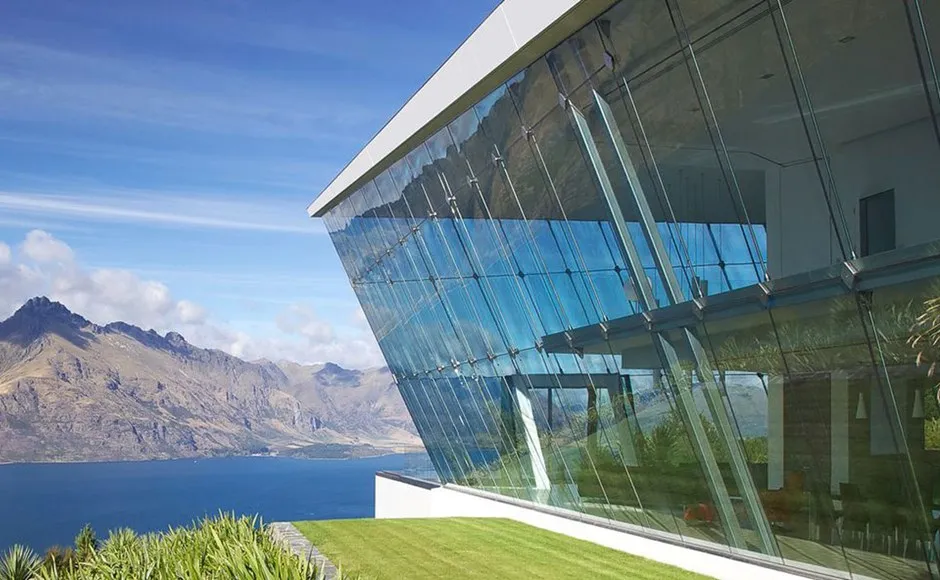
Top Architectural Glazing Plans: The Definitive Guide to High-Performance Facades
The integration of glass into the built environment has transitioned from a functional necessity—providing light and a barrier against the elements—to a sophisticated discipline defined by performance metrics and aesthetic ambition. In the modern era, a facade is no longer a static wall but a dynamic membrane. Top Architectural Glazing Plans. This shift necessitates a rigorous approach to the selection and deployment of materials, where the technical specifications of a single pane can influence a building’s entire lifecycle energy profile.
Contemporary design demands a synthesis of thermal efficiency, acoustic isolation, and structural integrity. Achieving this requires moving beyond standard specifications into the realm of specialized “top architectural glazing plans” that account for site-specific variables such as solar orientation, wind loads, and urban density. The complexity of these systems means that a failure in the planning phase—whether through an underestimation of thermal stress or a misunderstanding of coating durability—can lead to catastrophic long-term maintenance costs or systemic failure of the building envelope.
This article serves as a definitive examination of high-performance glazing strategies. It moves through the historical evolution of glass technology into the highly engineered frameworks used today. By analyzing the trade-offs between various glass types, framing systems, and installation methodologies, this guide provides the necessary depth for professionals tasked with overseeing the envelope of a significant architectural project.
Understanding top architectural glazing plans
To define “top architectural glazing plans” is to acknowledge that there is no universal “best” system; there is only the most appropriate system for a specific set of environmental and functional constraints. A common misunderstanding in the industry is the conflation of high cost with high performance. A plan that utilizes expensive, triple-glazed vacuum-insulated glass in a temperate climate with low solar exposure may actually be a poor plan, as the embodied carbon of the glass and the weight-bearing requirements of the frame might never be offset by operational energy savings.
A comprehensive glazing plan must balance three competing pillars: performance, constructability, and longevity. Performance is often measured by the Solar Heat Gain Coefficient (SHGC) and the U-value, but these numbers are meaningless if the plan does not account for the expansion and contraction of the framing material or the degradation of the edge seals over thirty years.
Oversimplification is a significant risk in the early stages of design. Many stakeholders view glass as a commodity, yet the distinction between a monolithic sheet and a laminated, soft-coat, low-emissivity assembly is as vast as the difference between a tent and a reinforced bunker. Effective plans integrate the glazing into the mechanical systems of the building, treating the window not just as a hole in the wall, but as an active component of the HVAC strategy.
Deep Contextual Background: The Evolution of Transparency
The history of architectural glass is a history of managing fragility. For centuries, the size of a window was limited by the blower’s lung capacity or the reach of a glassmaker’s iron. The development of the “Crown” and “Cylinder” methods provided larger panes, but it wasn’t until the mid-20th century, with Alastair Pilkington’s development of the float glass process, that perfectly flat, clear, and massive sheets became commercially viable.
This technological leap birthed the “International Style,” where glass curtain walls became the symbol of modernity. However, these early glass towers were often thermal disasters, requiring massive cooling loads to counteract the greenhouse effect created by single-pane, un-coated glass. The subsequent oil crises of the 1970s forced a pivot. The industry moved toward insulated glass units (IGUs) and the development of Low-E (low-emissivity) coatings, which reflect infrared radiation while allowing visible light to pass through.
Today, we are in the era of “smart” and “structural” glazing. We no longer rely solely on heavy mullions to hold glass in place; instead, we use structural silicone, point-supported spiders, and even load-bearing glass fins. The current systemic evolution is focused on carbon—not just operational carbon (energy used to heat/cool) but embodied carbon (energy used to manufacture and transport the glass). This history informs modern top architectural glazing plans by reminding us that every aesthetic choice has a thermal and environmental consequence.
Conceptual Frameworks and Mental Models
When navigating the complexities of high-end glazing, professionals often rely on specific mental models to ensure no variable is overlooked.
The Three-Barrier Model
This framework views the glazing system as a triple-layered defense.
-
The Thermal Barrier: Managing heat transfer via conduction, convection, and radiation.
-
The Weather Barrier: Managing air infiltration and water penetration through pressure-equalized rainscreens.
-
The Acoustic Barrier: Managing sound transmission (STC/OITC ratings) through varying glass thicknesses and interlayer materials.
The Lifecycle Equilibrium
This model forces the planner to look beyond the initial installation. It calculates the point at which the energy saved by a high-performance unit exceeds the energy required to create it. If a specific glazing plan reaches this equilibrium in 15 years, but the seals are expected to fail in 12 years, the plan is fundamentally flawed.
The “Edge-of-Glass” vs. “Center-of-Glass” Reality
A common error is relying on center-of-glass performance data. This mental model emphasizes that the weakest point of any glazing unit is its edge. The interaction between the glass, the spacer (warm-edge technology), and the frame determines the actual performance. A plan that focuses on the center but ignores the thermal bridge at the frame will result in condensation and localized heat loss.
Key Categories of Glazing Variations
Architectural glazing is categorized by its structural implementation and the composition of the glass itself. Selecting the correct category is a foundational step in top architectural glazing plans.
1. Stick-Built Curtain Walls
In this system, the components are fabricated in a shop but assembled on-site. This allows for high levels of field adjustment but requires skilled labor and favorable weather conditions during installation.
-
Trade-off: Lower upfront material cost vs. higher on-site risk and labor time.
2. Unitized Curtain Walls
The units are pre-assembled and glazed in a controlled factory environment before being shipped to the site and hung on the building.
-
Trade-off: High precision and speed on-site vs. massive logistical coordination and higher initial manufacturing costs.
3. Point-Supported / Spider Glazing
Glass is held by stainless steel fittings that connect at the corners of the panes. This creates the most transparent aesthetic but requires the glass to be tempered and often laminated to handle concentrated stresses.
-
Trade-off: Maximum visibility vs. complex structural engineering and higher air/water leakage risk if not meticulously detailed.
4. Structural Silicone Glazing (SSG)
The glass is bonded to the frame with high-strength silicone, eliminating the need for exterior metal caps. This results in a seamless “all-glass” look.
-
Trade-off: Sleek aesthetics and better thermal performance (less metal exposure) vs. the need for rigorous field testing of bond strength.
Comparison of Performance Characteristics
| System Type | Thermal Performance | Acoustic Isolation | Installation Speed | Maintenance Complexity |
| Stick-Built | Moderate | Moderate | Slow | Low |
| Unitized | High | High | Fast | Moderate |
| Point-Supported | Low | Low | Moderate | High |
| Structural Silicone | High | Moderate | Moderate | Moderate |
Decision Logic for System Selection
The choice between these systems usually hinges on the building’s height and the local climate. For high-rise structures in windy, coastal areas, a Unitized Curtain Wall is almost always preferred due to its ability to handle seismic and wind-induced floor sway. For a low-rise boutique museum where clarity is paramount, Point-Supported glass might be the priority, regardless of the thermal penalty.
Real-World Scenarios: Constraints and Failures Top Architectural Glazing Plans
Understanding how top architectural glazing plans behave in the real world requires looking at the friction points between design intent and physical reality.
Scenario A: The High-Altitude Thermal Stress Challenge
In mountainous regions or high-altitude cities, the pressure difference between the factory where an IGU is sealed and the installation site can cause the glass to bow inward or outward (pillowing).
-
Failure Mode: If capillary tubes are not used to equalize pressure, the glass may shatter or the seals may fail prematurely.
-
Decision Point: A plan must include pressure-equalization protocols or the use of heat-strengthened glass to resist the resulting stresses.
Scenario B: The Urban Canyon Acoustic Demand
A commercial tower located next to a major rail line requires extreme sound dampening.
-
Constraint: Standard double-glazing has a “coincidence dip” where specific frequencies pass through easily.
-
Solution: Using asymmetric glass (two different thicknesses, e.g., 6mm and 10mm) breaks the sound wave synchronization.
-
Second-order Effect: The increased weight of the asymmetric glass requires heavier-duty framing and more robust anchoring systems.
Scenario C: The Retrofit of a Landmark Structure
Installing modern glazing into a 1920s masonry building.
-
Constraint: The original structure cannot support the weight of triple-glazing.
-
Failure Mode: Forcing a modern unit into a failing masonry opening without structural reinforcement can cause the stone to crack.
-
Decision Logic: The plan might opt for high-performance vacuum-insulated glass (VIG), which offers triple-pane performance at a single-pane thickness and weight.
Planning, Cost, and Resource Dynamics
The economics of architectural glass are often misunderstood. The “cost” of glass is only a fraction of the budget; the “system” cost—including engineering, extrusion, gaskets, and installation—is where the bulk of the capital is deployed.
Direct costs are easily calculated, but indirect costs, such as the crane time required for unitized panels or the specialized cleaning equipment needed for complex geometries, are often overlooked.
Cost Variability Matrix
| Element | Estimated Cost Impact (Low to High) | Primary Driver |
| Glass Substrate | $15 – $60 per sq. ft. | Iron content (Clear vs. Low-Iron) |
| Coatings | $5 – $25 per sq. ft. | Number of silver layers (Single/Double/Triple) |
| Lamination | $20 – $80 per sq. ft. | Interlayer type (PVB vs. SGP) |
| Framing | $100 – $400 per sq. ft. | System type and finish (Anodized vs. Kynar) |
The opportunity cost of choosing a cheaper glazing plan is usually paid in the HVAC budget. A lower-quality glass requires a larger chiller and more ductwork, which not only costs more upfront but also eats into the rentable square footage of a building.
Tools, Strategies, and Support Systems
Developing top architectural glazing plans requires a specialized toolkit that extends beyond standard CAD software.
-
Thermal Modeling (THERM/WINDOW): Software that simulates heat transfer through the entire assembly, including the frame and spacers.
-
Solar Path Analysis: Using BIM to track how shadows from neighboring buildings affect the thermal stress on the glass throughout the year.
-
Visual Mock-ups (VMU): Full-scale replicas of the facade built to verify aesthetic quality and glass color (hue shift) under different lighting.
-
Performance Mock-ups (PMU): Structural testing where a section of the glazing is subjected to aircraft-engine-driven wind and water to ensure it won’t leak in a hurricane.
-
Dynamic Glazing Control: Integrating electrochromic glass that tints on demand, reducing the need for interior blinds.
-
Desiccant Monitoring: Systems for ensuring the air space between panes remains bone-dry to prevent internal fogging.
Risk Landscape and Failure Modes
The primary risk in architectural glazing is the “compounding failure.” This occurs when a small error in one area cascades into a systemic problem.
-
Spontaneous Shattering: In tempered glass, tiny inclusions of Nickel Sulfide ($NiS$) can expand over time, causing the pane to explode without warning. A rigorous plan mitigates this through “Heat Soaking,” a process where the glass is baked in a furnace to force unstable panes to break before they leave the factory.
-
Seal Failure: The longevity of an IGU depends entirely on the integrity of its secondary seal (usually silicone or polysulfide). If the glazing pocket is not properly drained (weep holes), the seal will sit in standing water and eventually delaminate.
-
Reflective Glare (The “Death Ray” Effect): Concave glass surfaces on curved buildings can focus sunlight into intense beams, melting car parts or harming pedestrians. Predictive modeling in the planning phase is the only way to catch this.
Governance, Maintenance, and Long-Term Adaptation
A glazing system is not “install and forget.” It requires a governance structure that dictates how the envelope is monitored over its fifty-year lifespan.
The Monitoring Cycle
-
Annual: Inspection of gaskets and sealant joints. Look for “crazing” or cracking in the silicone.
-
Five-Year: Testing of operable windows to ensure the hardware hasn’t fatigued and the air-seal remains intact.
-
Ten-Year: Infrared thermography scan of the entire facade to identify localized thermal leaks or failed IGUs that have lost their argon gas fill.
Adjustment Triggers
If more than 5% of IGUs in a specific elevation show signs of seal failure within a decade, it triggers a “systemic review” rather than a simple replacement. This involves analyzing whether wind-load calculations were insufficient or if a specific batch of sealant was defective.
Measurement, Tracking, and Evaluation
How do we determine if top architectural glazing plans are successful? We look at leading and lagging indicators.
-
Leading Indicators: These are tracked during the design phase, such as the predicted U-value and the results of the Performance Mock-up (PMU).
-
Lagging Indicators: These are measured post-occupancy, such as the actual energy bills compared to the energy model, and the number of comfort-related tenant complaints.
Documentation Examples
-
The Glazing Log: A serialized record of every pane of glass in the building, including its manufacturer, coating type, and date of installation.
-
Thermal Stress Analysis Report: A document proving that the glass can withstand the temperature differential between the center and the shaded edges.
-
Warranties: Clearly defined 10-to-20-year coverage for seal failure and delamination, backed by the manufacturer’s financial stability.
Common Misconceptions and Oversimplifications
-
Myth: Triple glazing is always better than double glazing.
-
Correction: In many climates, the extra weight and cost of triple glazing do not provide a significant ROI compared to high-performance double glazing with a “surface four” coating.
-
-
Myth: Tinted glass is the best way to control heat.
-
Correction: Tinted glass absorbs heat and re-radiates it into the building. Reflective Low-E coatings are far more effective at keeping heat out.
-
-
Myth: All “clear” glass is clear.
-
Correction: Standard glass has a green tint due to iron content. “Low-iron” glass is required for true color neutrality, which is vital for retail or gallery spaces.
-
-
Myth: Airtightness is only about the glass.
-
Correction: The interface between the window frame and the wall (the “perimeter seal”) is where most air leakage occurs.
-
-
Myth: Tempered glass is “stronger” glass.
-
Correction: While it has higher impact resistance, it is more prone to spontaneous breakage and has more surface distortion (roller wave) than annealed or heat-strengthened glass.
-
Conclusion: The Synthesis of Science and Sight
The development of top architectural glazing plans is an exercise in intellectual honesty. It requires admitting that glass is a contradictory material—it is both a bridge to the outside world and a barrier against it. A successful plan does not seek the most technologically advanced solution for its own sake, but rather the most resilient solution for the building’s specific context.
As we move toward a future defined by more stringent energy codes and a greater emphasis on occupant well-being (biophilia), the role of the glazing specialist will only grow. The ability to manage light, heat, and sound while maintaining structural safety is the hallmark of modern architectural excellence. The most effective plans are those that anticipate the “unseen” forces—the molecular expansion of a nickel sulfide stone, the slow degradation of a polymer seal, and the changing climate of the next half-century. In the end, the transparency of the building is only as good as the technical rigor behind it.