Best Structural Glass Enclosure Plans: Architectural Engineering Guide
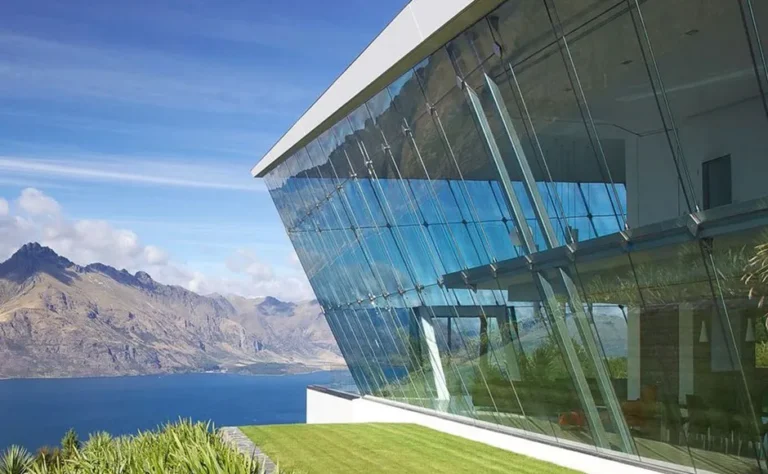
The intersection of structural engineering and architectural transparency represents one of the most rigorous disciplines in modern construction. Best Structural Glass Enclosure Plans. A structural glass enclosure—defined as a system where the glass itself carries a significant portion of the environmental or dead loads—is not merely a window assembly; it is a complex load-path negotiation. As urban density increases and the demand for biophilic design grows, the technical demands on these enclosures have shifted from simple aesthetic transparency to high-performance environmental filtration.
Navigating the landscape of the best structural glass enclosure plans requires a departure from standard residential glazing mindsets. We are dealing with materials that are fundamentally brittle, yet must perform with the reliability of ductile steel. This paradox necessitates a design philosophy rooted in redundancy, precise tolerance management, and a deep understanding of how glass behaves under sustained stress versus cyclic loading. The planning phase of such a project is often the most resource-intensive, as it dictates the viability of the structure for the next fifty years.
This article serves as a definitive technical reference for the systemic integration of structural glazing. It deconstructs the architectural intent, the mechanical requirements, and the long-term governance of these installations. By analyzing the nuanced trade-offs between different support systems—from point-supported bolted assemblies to fin-supported walls—we aim to provide a framework for selecting the most resilient and efficient enclosure strategy.
Understanding “best structural glass enclosure plans”
The phrase best structural glass enclosure plans is frequently misunderstood as a search for a “stock” blueprint or a universal product. In the realm of bespoke architectural engineering, the “best” plan is an optimized set of documents that account for localized seismic data, wind shear, thermal expansion coefficients, and human safety. A plan is only as good as its ability to bridge the gap between idealized architectural vision and the physical realities of material physics.
One of the primary oversimplification risks in this field is the assumption that structural glass is a commodity. Unlike standard curtain walls, a structural enclosure requires a high degree of “systemic cohesion.” This means that the fasteners, the silicone seals, the glass plys, and the primary building frame must function as a single unit. A failure to account for the differential movement between a rigid glass pane and a flexible steel building frame is a common characteristic of inferior planning.
Furthermore, the “best” plans prioritize “fail-safe” mechanisms over sheer strength. In structural glazing, we assume the glass will eventually break. A high-quality plan details exactly how the system will behave post-breakage—ensuring that the remaining plys can carry the load until replacement occurs. This transition from “strength-based design” to “resilience-based design” is what separates professional engineering plans from amateur summaries.
Deep Contextual Background
The lineage of structural glass can be traced back to the development of tempered glass in the early 20th century, but the true revolution occurred with the advent of “bolt-fixed” glass in the 1960s and 70s. Earlier systems relied on heavy metal frames that obscured the very transparency architects sought. The introduction of the “Pilkington Planar” system marked a pivotal shift, allowing glass to be supported by discrete points rather than continuous perimeter framing.
As the industry moved into the 21st century, the focus shifted from simple point-support to “all-glass” structures. Here, glass fins or glass beams act as the primary structural members. This evolution was driven by advancements in lamination technology—specifically the development of ionoplast interlayers (such as SentryGlas). These interlayers are significantly stiffer than traditional PVB, allowing laminated glass to act as a structural composite that remains upright even when shattered.
Today, the systemic evolution is moving toward “smart enclosures.” These plans integrate vacuum-insulated glazing (VIG) and electrochromic coatings into structural assemblies. The challenge has evolved from “how do we make it stand up?” to “how do we make it stand up while meeting carbon-neutral energy codes?” The contextual background of the modern enclosure is thus as much about thermodynamics as it is about statics.
Conceptual Frameworks and Mental Models
To evaluate the best structural glass enclosure plans, professionals use several core mental models to filter complexity.
The Redundancy Layering Model
This framework posits that no single component in a structural glass assembly should be a “single point of failure.” In a three-ply laminated glass beam, the plan must demonstrate that if the outer two plys fail, the inner ply—combined with the interlayer’s stiffness—can prevent a catastrophic collapse long enough for a safe evacuation.
The Thermal-Structural Coupling
Glass is a poor conductor but has a significant coefficient of thermal expansion. In large enclosures, the glass will grow and shrink at a different rate than the metal or concrete frame. The “plan” must be viewed as a living joint; if the connections are too rigid, the glass will crush itself. If they are too loose, the enclosure loses its weather-seal integrity.
The “Serviceability vs. Ultimate” Limit State
Engineers distinguish between how a glass wall looks and feels (Serviceability) and when it actually breaks (Ultimate). A glass wall might be safe, but if it deflects too much under wind, it causes psychological discomfort for occupants. The best plans balance the physics of safety with the human experience of stability.
Key Categories and Variations
Structural glass enclosures are generally categorized by how they transfer loads to the primary building structure.
1. Glass Fin-Supported Systems
Vertical glass “fins” act as the mullions. The primary face glass is attached to these fins using structural silicone or small patch fittings. This creates the highest level of transparency but requires significant depth in the enclosure’s footprint.
2. Point-Supported Bolted Systems
The glass is held by stainless steel “spiders” or bolts that pass through pre-drilled holes. This is highly flexible for complex geometries but introduces high stress concentrations around the holes, requiring precisely tempered glass.
3. Cable Net Structures
A highly sophisticated system where the glass is supported by a tensioned web of stainless steel cables. This allows for incredibly thin support structures but requires massive anchor points in the building’s primary frame to handle the tension.
4. Toggle/Pressure Plate Systems
A hybrid approach where the glass is held in a minimalist aluminum frame. While less “structural” than fin systems, it is often more cost-effective and easier to waterproof.
5. Structural Silicone Glazing (SSG)
The glass is bonded directly to the frame using high-strength silicone. There are no visible exterior caps, creating a “flush” glass look. The plan must account for the long-term UV degradation of the silicone.
Comparison of Enclosure System Archetypes
| System Type | Transparency | Wind Load Resistance | Maintenance Complexity | Initial Cost |
| Glass Fin | Maximum | Very High | Moderate | High |
| Cable Net | High | High (with deflection) | High | Very High |
| Point-Bolted | High | Moderate | Moderate | Moderate |
| SSG (4-Sided) | Moderate | High | Low | Moderate |
| Toggle System | Lower | Very High | Low | Low |
Detailed Real-World Scenarios Best Structural Glass Enclosure Plans
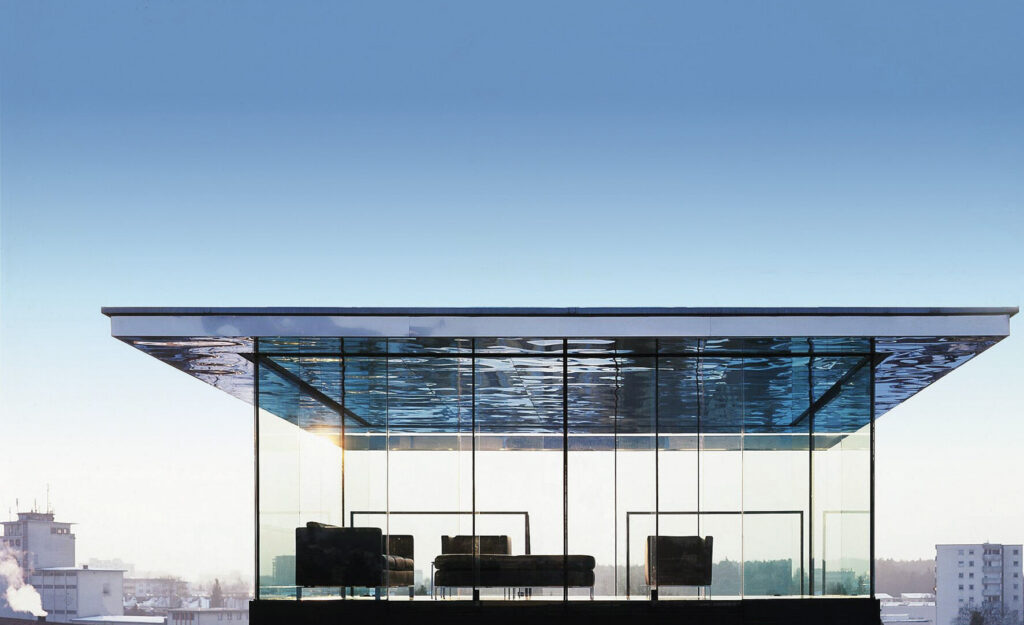
Scenario 1: The High-Traffic Atrium
In a public transit hub, the best structural glass enclosure plans must account for “blast resistance” and high-impact security. The failure mode here is often accidental impact from heavy equipment. The plan utilizes thick, multi-layered laminated glass with a sacrificial outer ply and a high-stiffness interlayer to maintain the enclosure’s seal even after a significant impact.
Scenario 2: The Coastal Residential Pavilion
In a hurricane-prone region, wind-borne debris is the primary threat. A cable-net system might be too flexible, leading to the glass clashing. Instead, a glass-fin system with “dry-glazed” gaskets is preferred. The second-order effect here is salt-spray corrosion; the plan must specify Grade 316 or higher stainless steel for all fittings.
Scenario 3: The Urban Infill “Glass Box”
When a glass enclosure is wedged between two old masonry buildings, the plan must account for “differential settlement.” If one building sinks 2mm more than the other, the glass enclosure could be twisted. The decision logic dictates using oversized holes in the spider fittings to allow for several millimeters of “slip.”
Planning, Cost, and Resource Dynamics
The economic reality of structural glass is that the “soft costs” (engineering, specialized testing, and logistics) often equal or exceed the material costs.
Cost Variability Factors
-
Glass Size: Moving from standard sizes to “Jumbo” glass (over 3.2m x 6m) increases costs exponentially due to the limited number of tempering furnaces globally.
-
Tolerances: A plan that demands 1mm tolerance across a 30-meter span will triple the installation labor cost compared to a 5mm tolerance plan.
-
Logistics: Structural glass is heavy. If the site cannot accommodate a crane, the plan may need to be revised to use smaller, manually handled panes, which increases the number of joints and reduces transparency.
Estimated Resource Allocation
| Phase | Duration | Primary Resource | % of Budget |
| Pre-Construction/PE | 3-6 Months | Structural Engineer | 15% |
| Material Fabrication | 4-8 Months | Specialized Glass Plant | 45% |
| Logistics/Specialized Crane | 1-2 Months | Logistics Provider | 10% |
| Installation/Glazing | 2-4 Months | Master Glaziers | 30% |
Tools, Strategies, and Support Systems
Executing the best structural glass enclosure plans requires specialized tools and methodologies.
-
Finite Element Analysis (FEA): Software used to model the stress distribution within the glass, particularly around point-supports or bolted holes.
-
Vacuum Lifters: Specialized rigging equipment with redundant battery backups, essential for the safe positioning of jumbo panes.
-
Heat Soak Testing (HST): A destructive testing strategy used to weed out panes at risk of spontaneous breakage due to nickel sulfide inclusions.
-
Structural Silicone Testing: Adhesion and compatibility tests (ASTM C1087) to ensure the silicone won’t react with the glass coatings or laminates.
-
Laser Scanning/BIM: 3D mapping of the site to ensure the primary structure is perfectly aligned before the glass arrives.
-
Mock-up Testing: Building a full-scale section of the enclosure and subjecting it to hurricane-force wind and water to prove the plan’s viability.
Risk Landscape and Failure Modes
The “brittle” nature of glass means that risks must be managed with extreme prejudice.
-
Nickel Sulfide Inclusions: Microscopic impurities in tempered glass that can expand over time, causing the glass to shatter without warning.
-
Edge Damage: 80% of glass breakages originate at the edges. If the plan does not specify polished or “seamed” edges, the risk of stress fractures increases.
-
Interlayer Delamination: If moisture reaches the edge of the laminate, the plastic interlayer can pull away from the glass, creating “clouding” and reducing structural capacity.
-
Sealant Incompatibility: Using a non-neutral cure silicone can dissolve the interlayer of laminated glass, leading to a systemic collapse of the bonding.
Governance, Maintenance, and Long-Term Adaptation
A structural glass enclosure is not a “set and forget” asset. It requires a documented governance plan.
Maintenance Checklist
-
Quarterly Gasket Inspection: Look for “creeping” or hardening of EPDM gaskets.
-
Annual Bolt Torque Check: In point-supported systems, thermal cycling can loosen the nuts over time.
-
Silicone Adhesion Review: Using a simple “pull test” on sample areas to ensure the structural bond remains intact.
Adaptation Triggers
If the local building code changes regarding energy efficiency, the enclosure may need to be “retrofitted” with internal thermal films. A high-quality plan leaves room in the structural capacity for such additions.
Measurement, Tracking, and Evaluation
Performance is measured through both quantitative data and qualitative observation.
-
Deflection Ratios: Using a laser distometer to measure how much the glass bows during high-wind events. It should return to its original position (elastic behavior).
-
U-Value Monitoring: Using thermal cameras in winter to identify “thermal bridges” where the support structure is leaking heat.
-
Air/Water Infiltration Rates: Periodic testing to ensure the enclosure is still airtight, which is a leading indicator of gasket or sealant failure.
Common Misconceptions and Oversimplifications
-
“Tempered glass is always safer.” While stronger, tempered glass can shatter completely. For structural applications, laminated tempered glass is the requirement.
-
“Silicone is just glue.” Structural silicone is a high-modulus elastomer with specific engineering properties. It is part of the load-path.
-
“Glass doesn’t bend.” In large enclosures, glass is remarkably flexible. The plan must allow for this “deflection” without the glass hitting the frame.
-
“Maintenance is just window washing.” Structural maintenance involves checking the integrity of the hidden fittings and structural bonds.
-
“All glass is clear.” Standard glass has a green tint due to iron content. Structural plans often specify “Low-Iron” glass to ensure the thick plys don’t obscure the view.
-
“Holes don’t weaken the glass.” Drilled holes significantly reduce the strength of a pane; the area around the hole must be specifically accounted for in the tempering process.
Synthesis and Final Editorial Judgment
The pursuit of the best structural glass enclosure plans is a pursuit of architectural honesty. By removing the traditional “mask” of heavy frames, we expose the structural logic of the building. However, this transparency brings an uncompromising demand for precision.
The most successful plans are those that treat glass not as a static panel, but as a dynamic participant in the building’s lifecycle. Whether utilizing glass fins for their purity or cable nets for their high-tech elegance, the priority must always remain the management of the brittle failure state. An enclosure that is beautiful but fails to provide a clear path for maintenance or a redundant path for load-bearing is fundamentally an incomplete plan. The “best” plans are those that marry the ephemeral beauty of light with the unyielding laws of physics.