Fire Rated Glazing Plans: High-Performance Engineering & Safety
In the modern architectural landscape, the demand for natural light and open sightlines has fundamentally clashed with the rigorous physics of life safety. For decades, the presence of fire-rated barriers implied an aesthetic compromise—opaque walls, heavy steel doors, or wire-reinforced glass that signaled a functional but visually obstructive “safety zone.” Today, the engineering of transparent fire barriers has shifted this paradigm. Fire Rated Glazing Plans. We are no longer simply looking for “fireproof glass,” but rather for integrated systems that can withstand the extreme thermal shock of an inferno while maintaining the structural and aesthetic integrity of a building’s design.
The complexity of these systems is often underestimated. A fire-rated glass pane is not an isolated component; it is a critical node in a larger assembly that includes specialized frames, heat-sensitive gaskets, and specific anchoring hardware. When life safety is the primary metric, the margin for error is non-existent. The behavior of glass under intense heat—specifically the transition from a transparent solid to a compromised liquid state or a shattered hazard—dictates the movement of occupants and the safety of first responders. Therefore, the strategic development of fire protection requires a shift from selecting products to designing comprehensive environmental defenses.
This analysis serves as an editorial reference for those navigating the technical and regulatory labyrinth of fire-resistive assemblies. We will move beyond the basic certifications of “20-minute” or “90-minute” ratings to examine the deeper mechanics: the difference between fire-protective and fire-resistive performance, the impact of radiant heat on egress corridors, and the logistical realities of maintaining these systems over a building’s lifecycle. By deconstructing the variables that govern fire-rated glass, we establish a framework for making decisions that balance human safety with architectural ambition.
Understanding “fire rated glazing plans”
To properly fire rated glazing plans, one must first decouple the idea of “fire-rated” from “fire-resistant.” In professional practice, a fire-protective plan and a fire-resistive plan serve entirely different structural purposes. The former is designed to block flames and smoke but allows radiant heat to pass through, while the latter creates an actual thermal barrier that prevents the temperature on the non-fire side from rising to dangerous levels. An oversimplified plan that ignores this distinction can lead to a catastrophic failure: a corridor that remains free of smoke but becomes so hot from radiant energy that it is impossible for humans to pass through it.
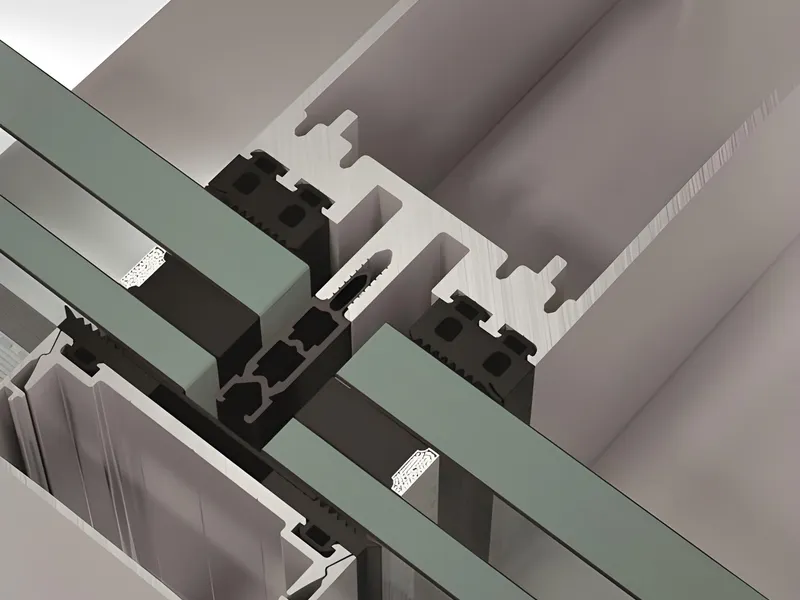
A multi-perspective audit of these plans requires looking at the “assembly” rather than the “item.” A common misunderstanding is that fire-rated glass can be placed in any standard steel or aluminum frame. In reality, the frame must be tested in conjunction with the specific glass type. If a plan specifies a 60-minute glass but uses a frame only rated for 20 minutes—or a frame not rated for fire at all—the entire assembly defaults to the lowest-rated component or, more accurately, loses its legal and functional compliance entirely.
Furthermore, fire rated glazing plans are inextricably linked to the building’s occupancy type and egress strategy. A plan for a hospital, where patients may be immobile, requires a different level of thermal defense than a plan for a commercial office park. In this context, “plans” refer to the logistical coordination of glass chemistry, frame metallurgy, and architectural placement. If the plan fails to account for the secondary effects of fire—such as the impact of hose-stream pressure on a heated glass surface—the barrier may shatter precisely when it is needed most.
The Evolution of Thermal Barrier Engineering
Historically, fire-rated glass was synonymous with polished wire glass. The embedded wire mesh served a singular, mechanical purpose: to hold the glass in place after it had cracked from thermal shock. While effective at blocking smoke and flames, wire glass presented a significant safety risk in non-fire situations due to its low impact resistance. Its evolution was driven as much by tort law as by fire science, leading to the development of wireless ceramics and intumescent laminates.
Modern engineering has moved toward the “intumescent” model. These systems consist of multiple layers of glass with clear, fire-sensitive interlayers. When exposed to heat, these interlayers expand and turn opaque, creating a thermal shield that blocks both fire and radiant heat. We have moved from a reactive “hold the shards” approach to a proactive “block the energy” approach. This evolution has allowed for the creation of massive transparent walls that function with the same thermal efficiency as a masonry wall, fundamentally changing how we perceive safety in open-office designs.
Conceptual Frameworks for Life Safety
Evaluating a fire-rated system requires applying three distinct mental models of physics and behavior:
1. The Radiant Heat Model
This framework focuses on the invisible energy emitted by a fire. Standard glass is transparent to infrared radiation; even if it blocks the flame, the heat passing through can spontaneously ignite furniture or cause skin burns on the other side. A sophisticated plan evaluates the “heat flux” at specific distances to ensure that egress routes remain habitable.
2. The Hose Stream Test Framework
In North American standards, fire-rated glass must often endure the “hose stream test.” After being heated in a furnace, the glass is blasted with a high-pressure water stream. This test simulates the extreme thermal shock and mechanical pressure of firefighting efforts. If the glass cannot withstand the sudden cooling and pressure, it is not considered “fire-rated” for most structural applications.
3. The Compartmentalization Strategy
This model treats the building as a series of independent cells. The goal of fire rated glazing plans within this framework is not to “save” the glass, but to ensure that the fire stays in its cell for a specific duration (20, 45, 60, or 120 minutes). This buys time for the evacuation of occupants and the arrival of emergency services.
Key Categories of Fire-Rated Glazing Systems
Selecting the right system involves navigating the trade-offs between visibility, weight, and thermal defense.
| Category | Fire Type | Duration | Primary Trade-off |
| Polished Ceramics | Protective | 20–180 Min | High cost; yellowish tint; blocks no radiant heat |
| Borosilicate Glass | Protective | 20–90 Min | Limited size availability; requires specialized frames |
| Intumescent Laminated | Resistive | 30–120 Min | Very heavy; sensitive to UV and moisture; blocks radiant heat |
| Fire-Rated DGU | Hybrid | 60–120 Min | Complex installation; provides thermal insulation (U-value) |
| Spec. Tempered | Protective | 20 Min | Minimal protection; cannot pass hose stream test |
Realistic Decision Logic
When you fire rated glazing plans, the choice is usually dictated by the building code (IBC in the US). If the glass is part of a “fire wall” or “fire barrier,” it must be fire-resistive. If it is part of a “fire partition” or “smoke barrier,” fire-protective glass may suffice. Choosing fire-resistive glass when protective glass is allowed is a common “over-spec” that adds unnecessary cost and weight; conversely, using protective glass where resistive is required is a legal liability.
Real-World Application Scenarios and Failure Modes
Scenario A: The Multi-Story Atrium
In an atrium, the primary risk is the “chimney effect,” where fire moves rapidly upward. Fire rated glazing plans for atria often require oversized, 120-minute resistive walls. The failure mode here is usually the structural deflection of the building; if the floor slabs shift during a fire, the glass may be crushed or popped out of its frame unless the expansion joints were properly engineered.
Scenario B: The Hospital Egress Corridor
Hospitals require the highest level of radiant heat protection. If a fire starts in a laboratory, the glass in the corridor must stay cool to the touch so that patients on gurneys can be moved past the fire zone. A failure to specify intumescent glass here can lead to a “heat trap” that makes the corridor impassable despite the absence of smoke.
Planning, Cost, and Resource Dynamics
The implementation of fire-rated glazing is a high-capital endeavor. Unlike standard glass, these systems cannot be cut or modified on-site. Any error in measurement requires an entirely new factory order.
| Component | Cost Impact | Operational Variable |
| Intumescent Glass | High | Weight ($10–20 \text{ lbs/sq ft}$) dictates structural needs |
| Heat-Resistant Steel Framing | High | Specialized welding/anchoring required |
| Custom Glazing Gaskets | Moderate | Must be compatible with the specific glass chemistry |
| Shipping & Handling | Moderate | Crating and heavy lifting equipment for oversized panes |
Risk Landscape and Failure Modes
The most dangerous failure in fire-rated glazing is “systemic incompatibility.” This occurs when a high-quality glass is installed with a non-fire-rated sealant or in a frame that warps at 400°F. Another compounding risk is Environmental Degradation. Intumescent interlayers are often sensitive to UV radiation and moisture; if the perimeter seal fails, the interlayer can turn cloudy or “boil” over time, rendering the glass visually unacceptable and potentially compromising its fire performance.
Governance, Maintenance, and Long-Term Adaptation
A fire-rated assembly is a “life safety asset” and should be managed as such.
-
Annual Visual Audits: Check for delamination (clouding) in laminated glass.
-
Label Integrity: Building codes require every pane of fire-rated glass to have a permanent, etched label. If this label is painted over or removed, the glass is no longer compliant.
-
Gasket Review: Heat-reactive gaskets (which swell to seal gaps during a fire) can become brittle. These should be inspected every 5–10 years.
Measurement, Tracking, and Evaluation
-
Leading Indicators: Submittal of UL (Underwriters Laboratories) or Intertek certification numbers; third-party verification of frame/glass compatibility.
-
Lagging Indicators: Performance during actual fire events (rare but critical for data); success in “pre-occupancy” fire marshal inspections.
-
Documentation: A “Master Fire Glazing Log” should be kept, detailing the specific manufacturer, rating, and location of every pane in the building.
Common Misconceptions
-
“Tempered glass is fire-rated.” Fact: Standard tempered glass will shatter almost instantly when exposed to the thermal gradient of a real fire.
-
“Fire-rated glass is unbreakable.” Fact: While some versions are impact-rated for safety, many are no stronger than standard glass against physical impact; they are designed to fight fire, not force.
-
“All fire glass blocks heat.” Fact: As discussed, “fire-protective” glass allows radiant heat to pass through freely.
Conclusion
The successful execution of fire rated glazing plans requires a disciplined approach to material science and regulatory compliance. We are no longer in an era where fire safety is an “add-on”; it is a foundational element of the architectural envelope. By understanding the distinction between protecting against flames and resisting heat, and by treating the entire assembly as a single unit of defense, designers can create spaces that are both light-filled and uncompromisingly safe. The future of the field lies in thinner, lighter, and clearer interlayers, but the physics of fire will always demand a rigorous, system-wide strategy for protection.